
Starving advocacy on principle
The conservation community knows well that political efforts advocating for wildlife and all-natural resources will not be funded by the conservation agencies. Perhaps lesser-known, many private foundations take a similar view. Yes, one can conduct outreach to educate the public about the threats. You can also carry out research, management, or restoration to help. I rely on this resource to fund much of my work. Many funds will provide operating capital for organizations that advocate politically. Both agencies and foundations can also support volunteer work improving the welfare of wild animals or their habitats or the ecosystems on which they depend.
But you cannot use that same funding to compel those volunteers or any public to take action against boneheaded policies and powerful industries destroying habitat or needlessly killing wildlife – the main threat to our rapidly dwindling natural resources. There are many exceptions, of course, such as small foundations or just generous wealthy people, but generally, significant funding sources resist directly funding advocacy.
At first glance, it seems a minor restriction given all one can do with agency and foundation funding. But a deeper look reveals conservationists have few resources to fight the main problem facing wildlife and habitat: public indifference to industry’s assault on our nation’s natural resources.
Half Measures and the Inevitability of Loss
It’s reasonable for agencies to take this view. After all, government employees should represent all the people. Public servants must consider all opinions when taking action, so advocating for one could prove politically dangerous. Better to educate the public with outreach programs so they can make reasonable choices about how to defend natural resources.
In theory, this may work. In reality, however, it fails to consider the well-funded advocacy of industry. These lawyered-up interests go to the agencies demanding cheap and destructive uses of our valuable natural resources or threaten action in ways most conservationists find difficult to match. These private interests essentially loot our public trust resources with lobbyists, lawyers, and well crafted social media or ad campaigns. These threats to our natural resources, waxes, and wanes depending on the party in power, but at least in my experience, agencies either stay clear of potentially damaging issues involving powerful business interests or construct fixes that satisfy them.
And these fixes eventually wear down wildlife and habitat to a nub of their original natural levels. At first, it appears wise, one part for the conservation of natural resources and what remains goes to the destruction by industry. But then another politically connected industry steps up and starts another negotiation that ends in another half step. Wildlife get half again and then again and yet again. Ultimately the damage grows until a species is listed or more likely a local population of wildlife disappears without any fanfare. Productive ecosystems bled dry without anyone the wiser.
Half-measures, weakfish and the destruction of small towns
I can point the reader to nearly anyplace in the hemisphere where these half measures have gradually destroyed valuable natural resources, but one need look no further than Delaware Bay.
Weakfish numbers in the bay have tumbled to insignificance. Marinas can no longer attract fishers and their boats because there is nothing to catch. Tackle shops died. Restaurants starved of customers. On the west coast or in another place on the east coast, agencies would brave selfish interests and close the fishery until it restored itself. Instead, regional and state agencies cut the harvest gradually hoping to stave off the political vengeance of people making money from the fish. It now stands at one fish a day. Any fishery expert knows this choice is utter nonsense. Fishing costs money, and a whole day fishing for one weakfish won’t cut it for most fishers. But fishing industry and self-interested politicians advocated half measures to mislead sport fishers against their interests.
Weakfish, of course, had no voice at all. Any of the groups that could navigate the labyrinth of agency meetings or understand the obfuscation of agency-speak had no resources to counter the prodigious war chests of the fishing industry. Why? Because funders grow weak-kneed at any hint of this kind of advocacy.
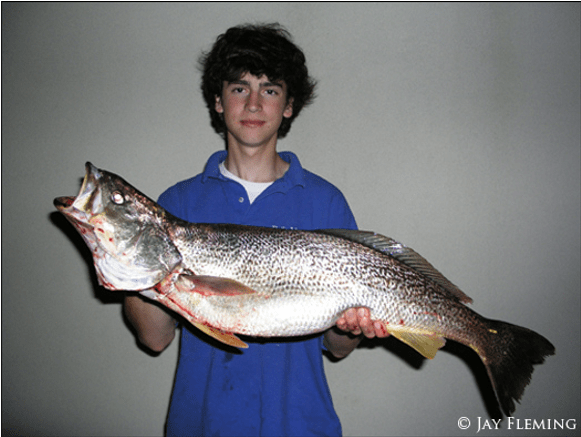
This young man holds a monster weakfish. Photo by Jay Fleming

The collapse of fish populations rippled through the fragile rural economy of Delaware Bay coastal communities. Tackle shops, boat rentals., marinas and restaurants suffered immediately and remain so because the fish never recovered.
Lots of ammunition and no guns
But how else can the public fight ill-conceived policies and regulations aimed at protecting the interests of the wealthy and their industries rather than the resource itself? How else to fight well-financed industry lobbyists or ad campaigns. How else can one combat regulatory capture lead by former regulators enjoying well-paid jobs guiding resource industry evasion and destruction?
Awareness Campaigns are the usual answer. But outreach only provides ammunition without a gun to deliver it. Usually, outreach materials speak for natural resources in a broad sense. Variations on wildlife needing something: habitat, clean water, or the public goodwill. But if it is funded by a large foundation or agency it will not advocate action against a specific industry or a government policy or a regulation. I once served in government and so understand how the rules have been jiggered to require this.
But the lack of support from major foundations and agencies for direct confrontation constrains conservation action to that acceptable to political and resource industries. Sometimes successful actions result. All to often, however, the lack of public involvement almost forces agencies to squandered our precious natural resources with the iterative assaults by industries with political muscle.
A medusa head of unblamable threats.
Although not responsible to the whole public, the private foundations must choose their battles carefully, or else their limited resources can be wasted in endless litigation or worse. Their financial support could ebb with controversy as wealthy donors pull back.
And let’s be honest, we all know why they insist on a restriction on advocacy. As stockholders, board members, or owners, the donors rely on the industries demanding the half measures advocacy would prevent. And so they do what many of us do: assuage their guilty conscience by offering up money or time to well-heeled foundations.
In one way this is how it must be. We, conservationists, need every cent of available money, regardless of its restrictions, to battle the worldwide assault on wildlife and fisheries and the ecosystems in which they belong.
But seen from another perspective, this could be the main reason why we fight this battle. There are many threats to our natural resources that cannot be easily understood or easily blamed on anyone entity —like the collapse of weakfish on Delaware Bay. The list of these types of threats with no obvious culprit, a sort of ecological death by a thousand cuts, goes so deep it’s depressing to consider. But what if the only lasting and effection solution to the Medusa head of risks is a large and involved public motivated by advocates fighting from the trenches for our wildlife and habitats?
Conservationists need funding for advocacy
We, professional conservationists, think if we create solutions and convince the agencies or foundations to fund it, the public will follow our leadership. But after decades of following this line of thinking, I can say its a chair missing a leg.
How can any solutions work when the side doing the destruction drowns the public and agencies with advertising or social media campaigns or funding corruptible politicians or pliant conservation groups to do their bidding. How do smart solutions matter when the large funds refuse to fund advocacy to put them into action?
Wildlife, fish and their habitats speak with a minor voice in the cacophony of industry whiners demanding the destruction of our precious natural resources. Likewise, few hear the voice of the local communities dying from this deplorable selfishness. Nor do we listen to our children and grandchildren who will someday realize the generation in power chose to use up our natural wealth instead of banking it for the future. I feel sure the great conservationists of the past, John Muir, Teddy Roosevelt, FDR, Aldo Leopold would all say the generation destroying their natural legacy enjoyed the spiritual and economic wealth the most.
We need to hear all these voices and rethink how to deliver real conservation based on recovery and productivity. This new conservation can start with major funders seeding advocacy for fuller measures and politically difficult solutions.
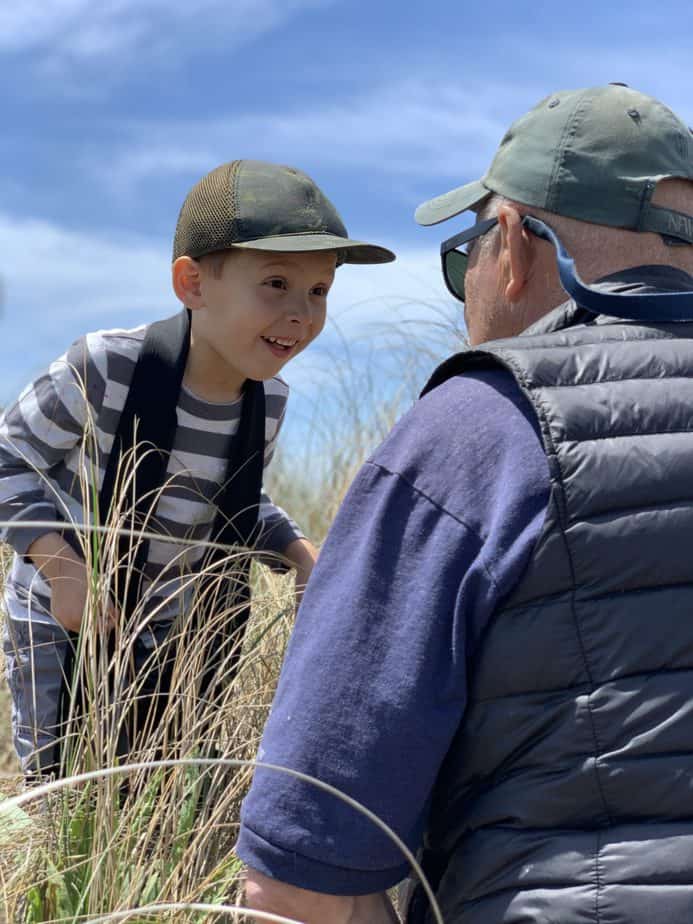
The author’s grandson Benjamin Niles helping with grandpa’s fieldwork. He makes me wonder, don’t most grandparents abhor the selfishness of leaving behind a legacy of bankrupted natural systems?
