
We are all horseshoe crab people
This cartoon by Ellis Rosen, a cartoonist with the New Yorker magazine, goes to the heart of how our project has shifted and grown over 29 years. We have all become horseshoe crab people. In some ways, we always were, but the emphasis has changed — from shorebirds to stopover, from counting birds to defending the ecosystem that keeps the stopover viable. When we first started, we studied the needs of shorebirds in fast decline as agencies allowed a historic overharvest of horseshoe crabs. We continued that work over the years, trying both to combat the shortsighted destruction of the bay’s productive core and to find ways that could accommodate the interests of the fishing industry, especially those who both worked and lived on the bay. The fundamental goal was to balance those competing pressures and preserve the Delaware Bay stopover.
In many ways, nearly three decades of work have succeeded. Yet the stopover remains a remnant of what it used to be. Until the early 1990s, over 1.5 million shorebirds came to Delaware Bay each May because horseshoe crabs laid eggs in jaw-dropping densities — over 50,000 eggs per square meter. That abundance sustained one of the great wildlife spectacles on earth. Now we have fewer than 300,000 shorebirds, and egg densities of roughly 10,000 eggs per square meter — a five-fold decline in the food that fuels the birds’ transcontinental migration. It sounds like failure. It isn’t.
Over the last six years, our home team — John Bloomfield, Stephanie Feigin, Susan Linder, Theo Diehl, and David Mizrahi— helped found and build the Horseshoe Crab Recovery Coalition, a group that now includes over 50 of the nation’s best and most active conservation organizations, academics, and pharmaceutical industry scientists. We have also worked alongside passionate shorebird and horseshoe crab advocates from Georgia to Massachusetts. We learned a great deal from all of them. But the most important lesson, reinforced again and again, is this: if it weren’t for our work over the last 29 years, Delaware Bay would look like every other East Coast estuary that once held abundant horseshoe crabs. In a word, decimated.
With help from the HCRC, the New York State Legislature passed a moratorium on the killing of horseshoe crabs for any reason. Throughout that battle, we heard legislators describe their early lives on the shores of Long Island Sound and the south shore of Long Island — childhoods full of horseshoe crabs. Now those places have no measurable eggs on their beaches. We have heard the same story in nearly every East Coast state.
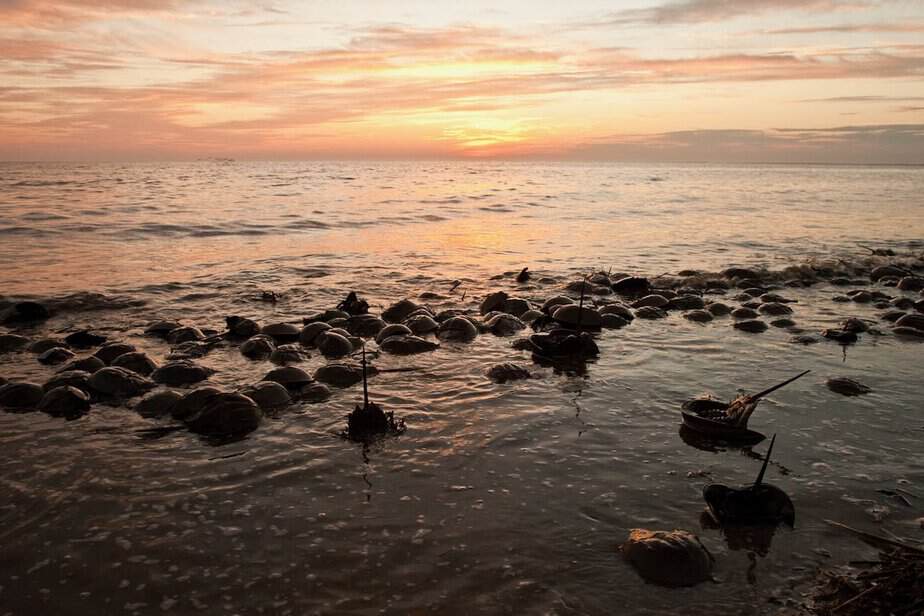
Horseshoe crabs by J Van der Kamm
Our work in Delaware Bay has proven fruitful. We have preserved the most important shorebird stopover in the world. But we must hold two things in mind at once: we are not done, and we may never be done. Agencies are again moving to increase the harvest of horseshoe crabs from the bay — not because the science supports it, but because the crabs are still there. Alternative baits of proven value exist. New synthetic alternatives are fast replacing crab-derived lysate. Yet the agencies continue to justify killing with untested assumptions and circular reasoning. The knife edge of this fight is sharper now than it was in 1997, when we started. The goal remains the same: stop the killing of horseshoe crabs and let them fully restore the bay.
A Slow Start
And so we return to the beach, as we have every May for 29 years, to see what this season would bring.
We started our first reconnaissance of the year under a brilliant blue sky, with a strong north wind and almost no horseshoe crabs on the beach. Last year, on this same first run, we counted 3,000 red knots. A few days later, on May 14, we saw 12,000. Then the bay water had warmed by now, and the egg densities were decent for early in the season. But the cold weather of the past several weeks has slowed horseshoe crab spawning — the laying of egg clusters and the presence of surface eggs that the birds depend on. In our first recci, surveying every beach from Norbury Landing to Thompsons, we found 670 red knots, 1200 ruddy turnstones, and 800 sanderlings. We found a promising concentration of red knots at North Reeds and hoped to make a catch the next day (May 13)
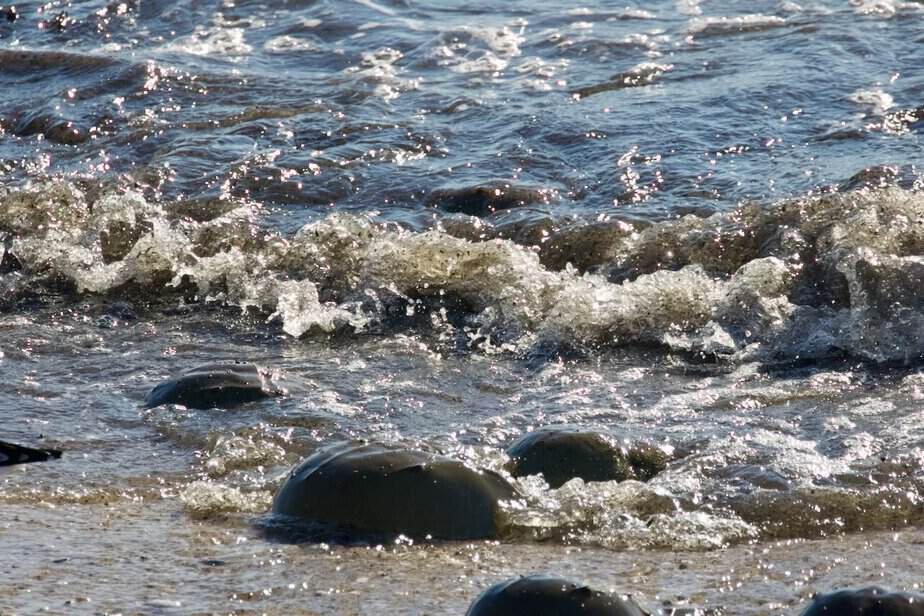
Horseshoe crab struggle to spawn in the rough surf at Reeds Beach NJ
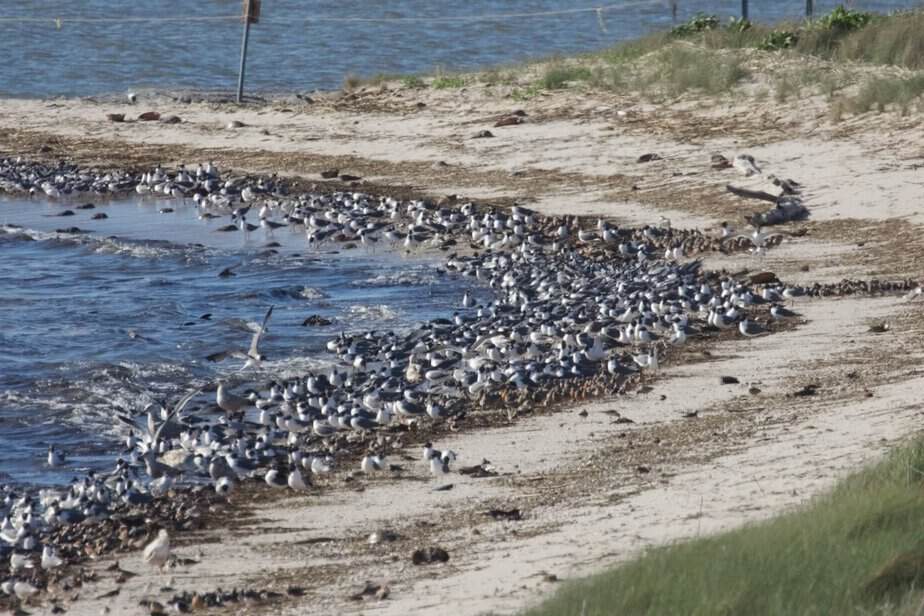
Red knots and Laughing gulls forage on horseshoe crabs eggs at Reeds Beach NJ
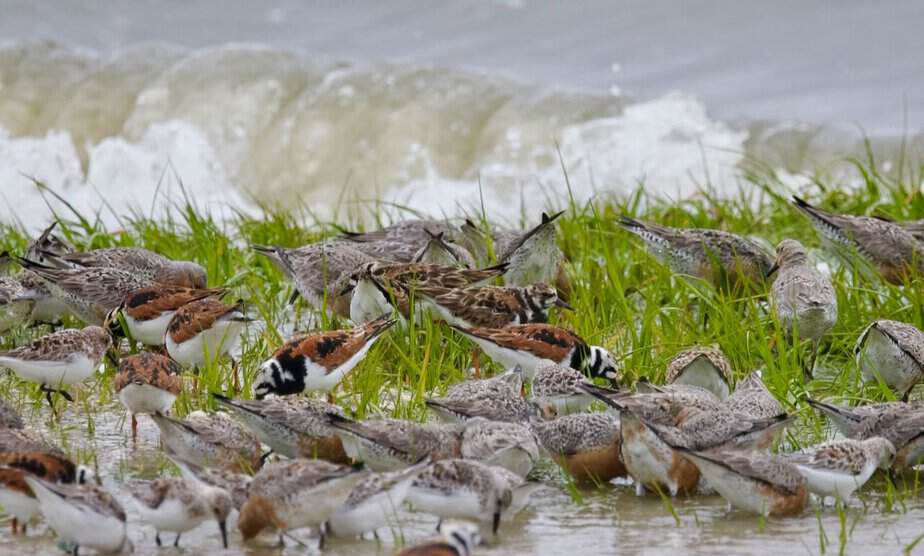
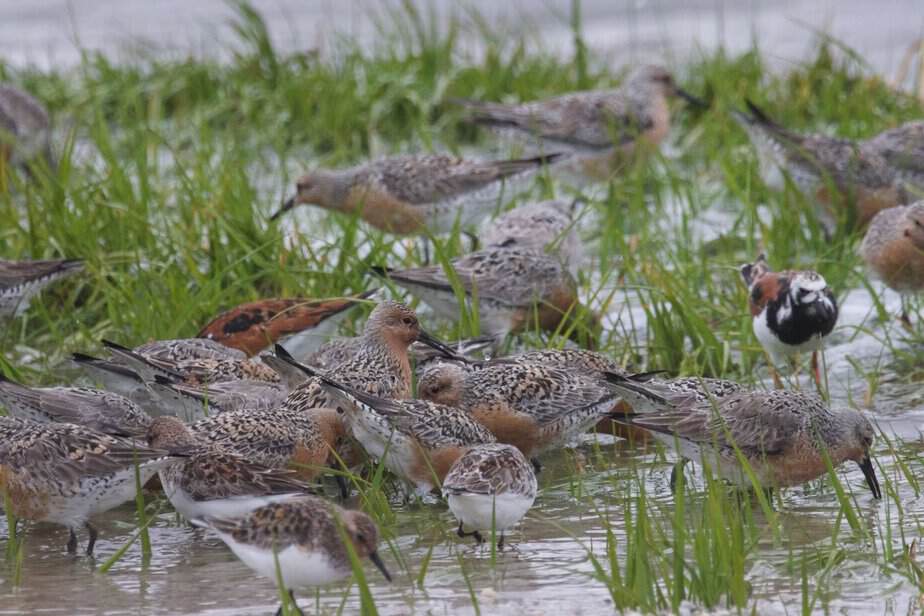
Knots, turnstones and sanderlins forage in the wave washed spartina hunting for horseshoe crab eggs
But the next day we were met with a furious wind from the Southwest and tumbling waves all along the shoreline. Only a few knots could weather the harsh conditions at North Reeds, and we chose to wait until low tide. The decision proved prescient. We found over 2000 knots at South Reeds, birds that appeared to have just arrived. Eventually, we caught 88, and the low weights, nearly all of which were less than 120 grams, told us our hunch was right.
The water temperature at Cape May is hovering around 59°F. Even today ( May 14), the bay temperature combined with the onshore wind still prevents a decent spawn. But we hope all that will change sharply tonight, as warm weather moves into the region and remains for at least four days. Warmer water combined with a spring tide should bring a good spawn and happy shorebirds
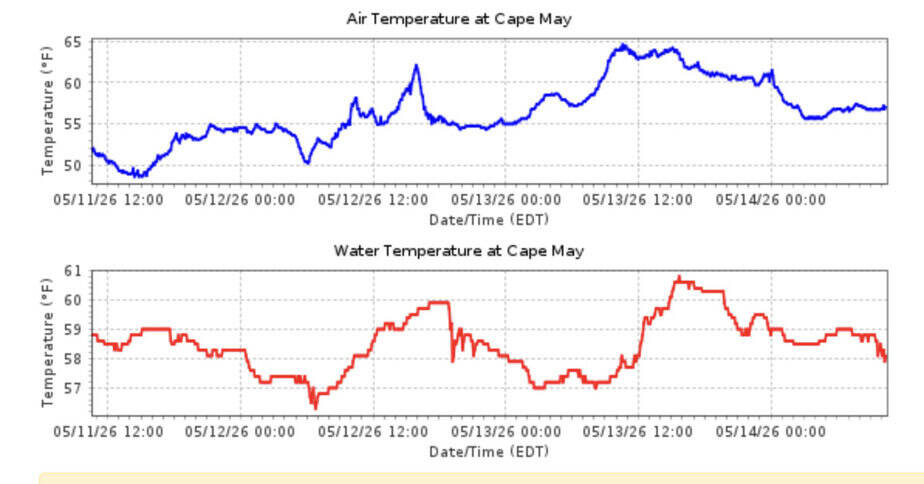
The water temperature on Delaware Bay stays at the threshold for spawning activity to occur, roughly around 59 degrees F