previous post
The Delaware Bay Shorebird Project in NJ alters the boundaries established in the most US conservation efforts. Instead of relying heavily on paid staff, instead, it incorporates responsible and professional volunteers into every aspect of the work. How did it evolve into this, how does it compare to other staff dominated projects? How did volunteers perform their passionate tasks?
Monitoring vs. Management
Usually, agencies cleave the science of conservation from efforts to restore or manage. In other words, the biologist assessing the health of a population with surveys or research acts independently of those implementing programs to restore wildlife or habitat, like increasing forage or rebuilding damaged habitat.
Of course at the heart of the distinction is money and politics. Agencies and foundations prefer funding management over monitoring, especially long-term monitoring, which has no point other than informing management. Politicians want research and monitoring separated from management because it allows more political influence in controversial management projects. This fear of data is why congressman Jeff Van Drew, opposed the creation of a saltwater license in NJ with a $10 fee. By denying Marine Fish Agencies funding to do critical monitoring of fish stocks, Van Drew gave permission to the seafood industry to take without regard to the damage caused to fish populations or make a fast buck at the expense of the recreational fisher economy of marinas, bait shops, restaurants, etc.
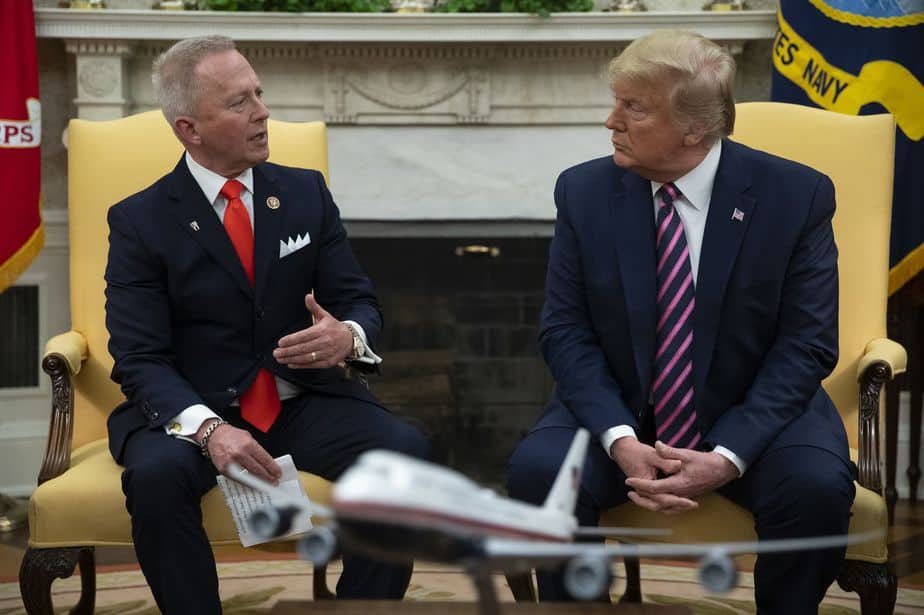
Democratic Congressmen turned republican Jeff Van Drew meets with Trump. Van Drew prevented NJ from enacting a salt water license and with it the new funding that would help biologists determine the impacts of industry abuse from overfishing sportfish stocks, forage fish and unrestrained bycatch.
But this separation of monitoring and management defines most conservation groups as well, mostly for financial reasons. Those with research and monitoring arms, like NJ Audubon, usually keep research and monitoring separate from the better-funded management side of the group. Most funders prefer to fund management like habitat restoration rather than monitoring or research because they believe its a more direct approach to helping wildlife. Long term monitoring rarely receives sufficient funding.
Adaptive management and monitoring
The ideal should be an approach collectively known as adaptive management, formally known as Adaptive Resource Management ( ARM). In ARM, both management and monitoring come together to inform better management. These projects embed tracking metrics that describe the management and theoretically provide useful guidance on conducting the project while in progress or for the next project. I belong to an ARM effort at the Atlantic States Marine Fish Commission. It attempts to relate fishery statistics to those from birds, to manage the horseshoe crab harvest adaptively.

Unfortunately, most adaptive management monitoring is an afterthought or guided by biologists hoping to collect data for existing projects and only nominally associated with the management. Usually, the data collected doesn’t affect the current management effort because monitoring biologists have little standing in the command of the project. Most often, the monitoring results don’t guide future projects either because the monitors rarely publish the data they collect, so it sits useless in unpublished project reports or virtual file cabinets.
Defying standards
Our shorebird project was formed under unusual circumstances and so evolved into monitoring, research, and management being tightly woven together as one effort. It started when in 1997 Clive Minton, Allan Baker, and Humphrey Sitters led a gaggle of shorebird scientists to the shores of Delaware Bay following a month of trapping the same shorebirds in South America where the birds started their yearly journey. The scientists were all professional, but most in some other expertise. Clive’s earned his Ph.D. from Cambridge in metallurgy while Humphrey Sitters earned a living as a lawyer.
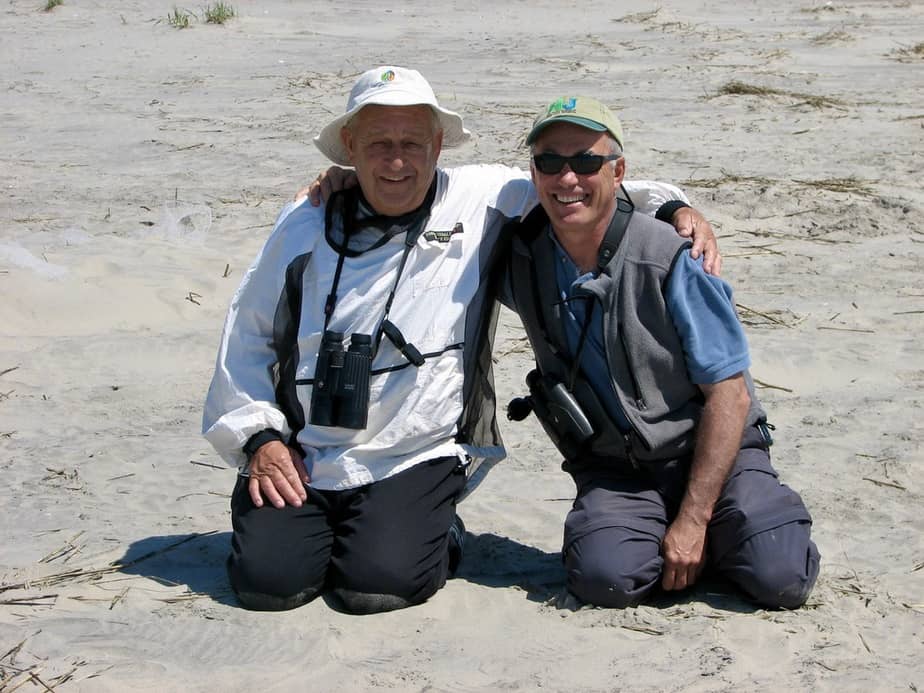
Clive Minton and Larry Niles on Cooks Beach NJ 2006. Clive first came to the bay in 1997 and helped start our project that lasts to this day
The group arrived just as Governor Christie Whitman and her aid Judy Jengo fought NJ Fish and Wildlife’s Marine Fish Council who refused to head off the carnage of two and half million horseshoe crabs spawning on Delaware’s shores. As chief of the NJ Endangered Species Program, I had to argue the case for a moratorium to the council. I used the data collected by our shorebird project team collected that year. We achieved a moratorium in NJ, but the battle continued as other states took Delaware Bay crabs. This turned out to be the beginning as new threats emerged.
Too many threats too few biologists
We had to protect the foraging birds from the great number of people coming to the bay to see the birds and crabs but unaware of the bird’s needs. Photographer’s hunted birds down for good pictures, daytrippers out for an ecological thrill tried to get selfies close to the birds, or sport fishers who cared only to catch fish took over beaches. All focused on their pursuits regardless of the impact on birds.
After Hurricane Sandy pounded beaches and swept away 70% of the optimal habitat, we had to restore them and used shorebird project data to help guide the projects. Oyster farmers used their insider status to change the rules of protecting intertidal habitat to expand oyster aquaculture without regard to impact. We had to initiate the battle to stop them from developing into every suitable horseshoe crab habitat. Shorebird project data played a big role in the USFWS Programmatic Opinion that protected the intertidal zones after state agencies yielded them up for exploitation. Lysate bleeding companies located in other states but taking blood from Delaware Bay horseshoe crabs without any substantive or restrictive regulation. Here too horseshoe project data help underpin conservation group efforts to rein in the needless overbreeding and killing of crabs.
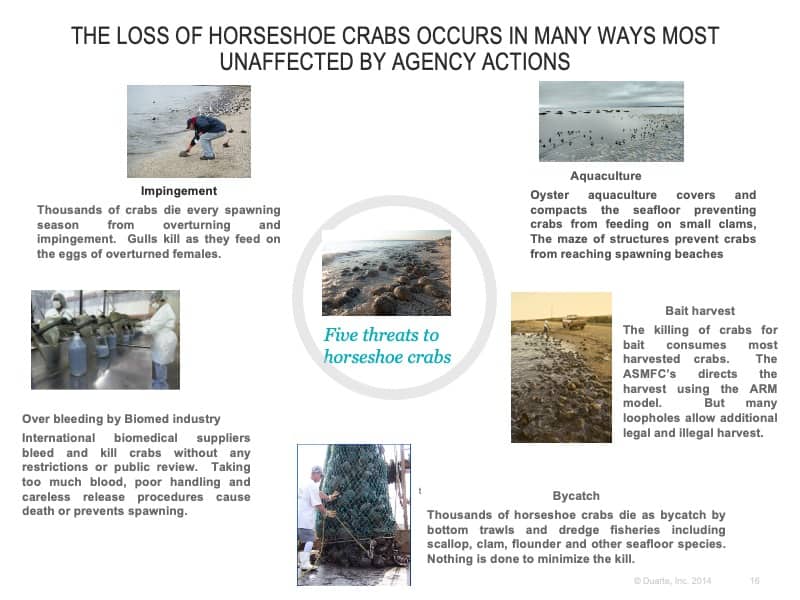
All of these battles didn’t come and go but came and grew. We needed to collect data because it was our only way to stop persistent political efforts to take these economically valuable public trust resources to industries that care nothing for ecosystem health or population viability. So we needed to continue collecting data on shorebird numbers and their condition each year. We needed to track horseshoe crabs and their egg densities. We needed to stop people from chasing shorebirds. We needed help and lots of it.
Volunteers fill the gap
But how to do all this work when no one wants to pay? Clive brought an answer to this fundamental problem bedeviling most wildlife conservation projects in the US. In his experience, wildlife conservation started with smart, well trained conscientious volunteers. They carried out most of the work of monitoring because they loved birds and the work. But they also took the time to ensure the monitoring would provide others the basis for protection often without government involvement.
For example, he helped start the Broome Observatory nestled squarely in Australia’s desolate and deadly northwest coast near Darwin. He trapped shorebirds there with a legion of volunteers who paid for all the expenses. We took part in Clive’s banding campaign in 2008. We banded thousands of shorebirds of many different species and collected valuable data on all of them. The project anchored biologists’ work in many countries in the Australasian Flyway, including the tremendous ecological battle to save the wetlands of the Yellow Sea, a Delaware Bay-like stopover in that flyway.
The Broome Observatory anchored extensive and numerous biological investigations relying heavily on Clive’s banding and survey data as well as tracks from transmitters and geolocators attached during the trapping expeditions. Broome also employed a warden to protect shorebirds around Broome as well as an 80-mile beach. , a NJ size stretch of Australia’s west coast where one “never worries about the sharks because the saltwater crocs eat them all.” On this wild and completely uninhabited beach, millions of shorebirds spend the austral winter. The protection conducted by Broome Observatory wardens relied entirely on the volunteer-driven data collection with modest support from the Australian government.
a new perspective on the protection
From this perspective grew the Delaware Bay Shorebird Project in NJ. Our paid team ensures the majority of the funds go to support the volunteer effort. Each year people come to the bay to help in the trapping and monitoring. This largely volunteer team conducts a yearly assessment of bird numbers and condition, a yearly assessment of horseshoe crab eggs and horseshoe crab spawning, yearly surveillance of avian influenza, yearly tagging with tracking tags, geolocators, transmitters or satellite transmitters depending on the year.
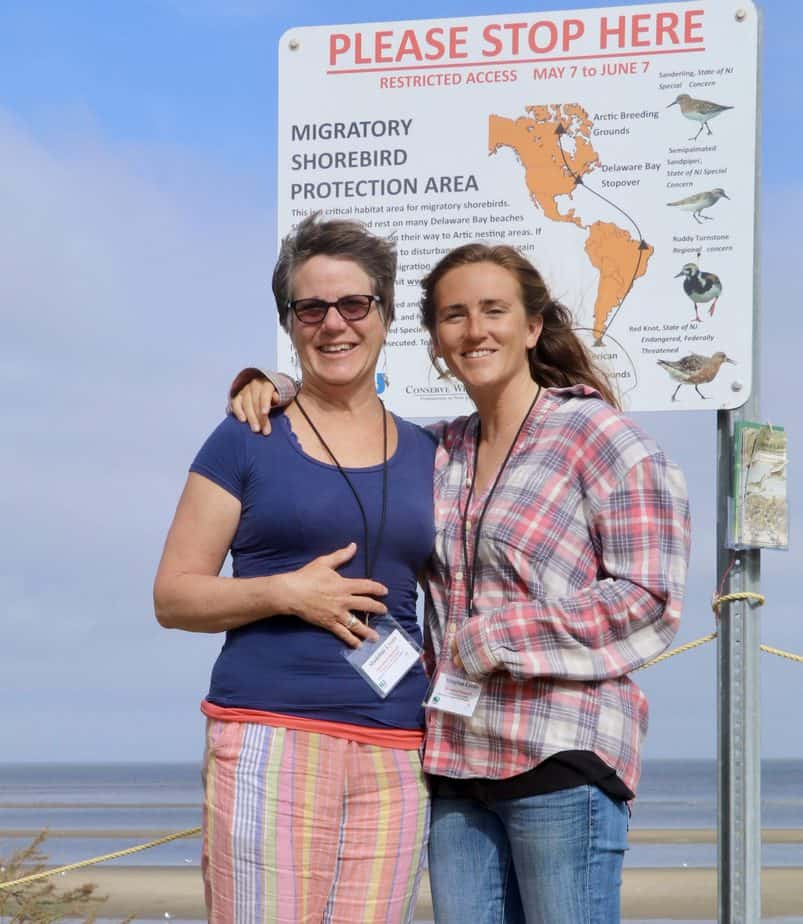
At the same time, these data and funds help inform and support volunteer stewardship programs ( Conserve Wildlife Foundation of NJ), a crab rescue program ( Return the Favor), and a beach restoration program ( American Littoral Society). Also, the data is being used in policy and regulation by helping to set the quota for the harvesting of horseshoe crabs, and assessing the impact of oyster aquaculture. It also helps guide the protection of shorebirds while feeding on Bayshore beaches. Paid staff and volunteers erect fencing and signs and then steward the beaches.
Praise for the volunteers taking care of Delaware Bay’s horseshoe crabs and shorebirds
I speak for the NJ Shorebird team in saying we are indebted to the many volunteers that take part in this work. Stewards religiously help people understand the need to allow the shorebirds time to feed and all but a few find satisfaction in just seeing the birds from behind the posted barrier. Volunteers also rescue crabs as part of Return the Favor. oftentimes they are the same people, who both steward beaches, overturn crabs and help with the Shorebird Team. Allowing birds to feed accomplishes the primary goal of the project. The data collected by the volunteers like estimating the number of red knots in the bay or the resighting of unique ID leg flags allows population estimates and aids in tracking individuals around the hemisphere. Volunteers from Citizens United to Protect the Maurice River cooked dinner for us nearly every night and left us with fixings and leftovers that kept feeding us at lunch and for snacks.
All this was done remotely, of course, because of the virus. We saw people but could only utter face mask distorted thank you and brief updates as to what is happening. It was one of our greatest disappointments not to thank these beautiful people who braved the virus to leave their homes and provide scientists, birds, and crabs care in a grave time in our nation’s history.