
Previous Post
NJ Fish and Wildlife Adopts a Groundbreaking Rule to Protect Red Knots and Other Shorebirds
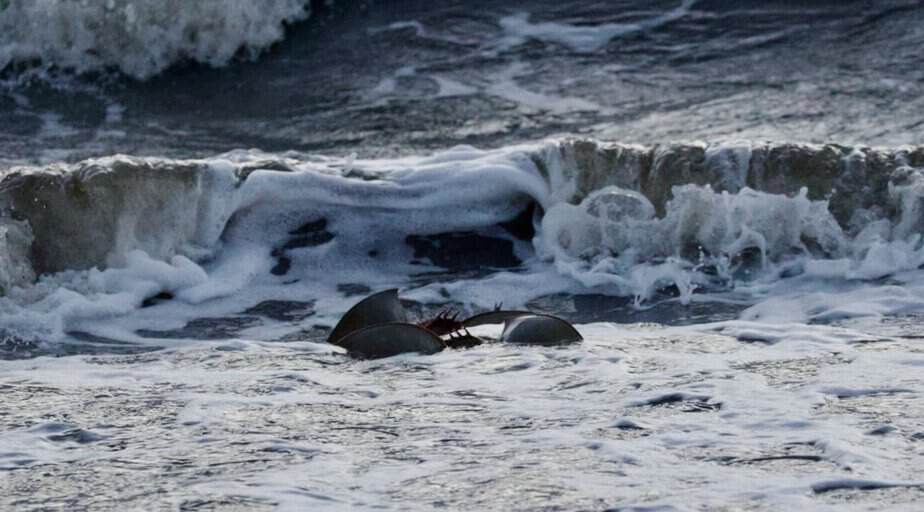
Horseshoe Crabs are struggling to reach dry sand but are caught in the surf. For the last 3 days, onshore winds and cold water have limited the spawning of crabs.
We left the Cape Shore because of fierce northwest winds that created breaking surf, shutting down the crab spawn, and pushing shorebirds into the various nooks and crannies of the bay, which makes them hard to find and catch. We rode north and west to Moore’s Beach to attempt a catch of ruddy turnstones, knowing the small creek mouth would be sheltered from the strong winds. We arrived around 9:00 a,m., set our net, and soon after caught 81 birds, including 50 ruddy turnstones, 30 sanderlings, and one red knot.
While we were working on the birds, banding and measuring body condition, drawing blood for a heavy metals study, and testing for avian influenza, we saw a man walking his dog out onto the beach. Birds flushed in all directions, especially from the unleashed dog, who was enjoying a bit of chasing birds. As with all beaches on Delaware Bay important to shorebirds in NJ, the beaches are closed to beach users for most of the month so birds can feed without disturbance. We asked the man not to walk his unleashed dog on the beach, and he dismissed us and kept walking. I told him why the beach was protected. He said, “Call the cops then.”
And we did, and it worked, because NJ Fish and Wildlife proposed and approved what is very likely the most important regulations protecting migratory shorebirds in the nation. The new rule gives NJ Fish and Wildlife Conservation Officers the power to cite a person who refuses to abide by the beach protection rules, with fines ranging from $250 to a whopping $25,000. They published the map below of all the areas, starting in the Villas and moving to all the beaches important to birds and crabs, up to Fortescue and Money Island.
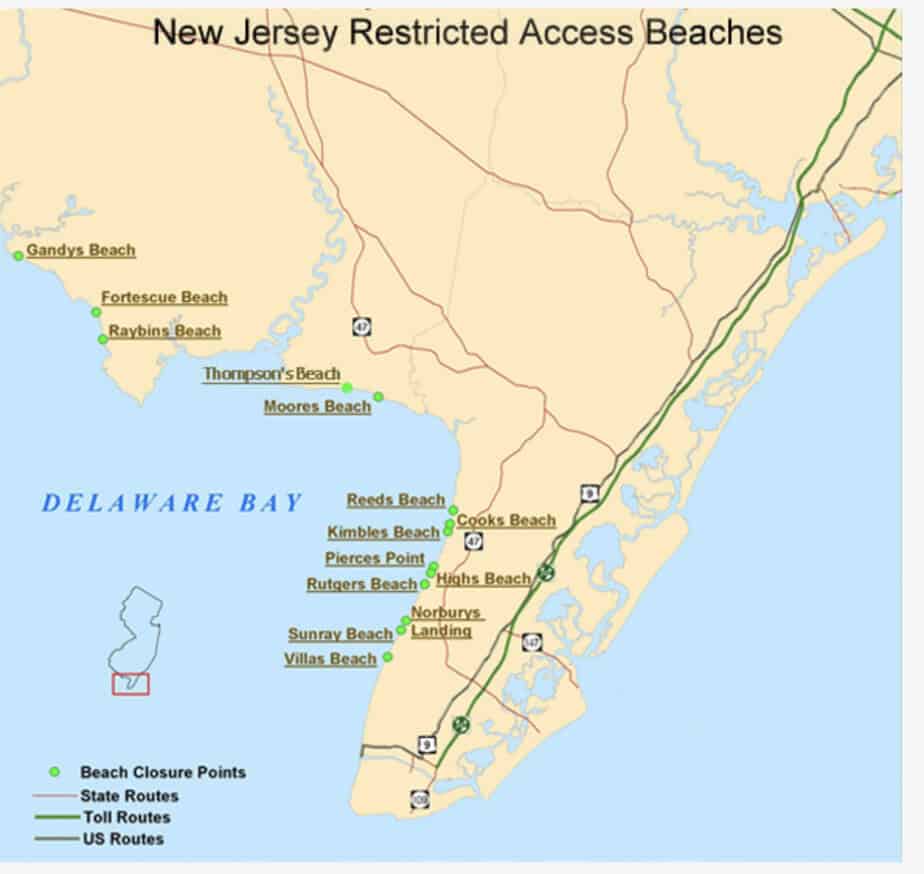
This map by NJ Fish and Wildlife shows the beaches where the new rule protecting shorebirds will be enforced
We know the protection works. Fish and Wildlife has been posting beaches since 2003, and most people have graciously abided. And the birds have responded. Over the last 20 years, most of the red knots, the most sensitive of shorebirds to disturbance and the only federally listed species, have gradually moved to New Jersey’s protected beaches from Delaware, which chooses not to protect its beaches. It only makes sense. Shorebirds come to the bay to get fat. Red knots sometimes double their body weight in just a few weeks while feeding on horseshoe crab eggs. Disturbance causes birds to move away, making them leave the best places for gaining weight. Disturbance also causes them to move around instead of feeding, further impacting the birds during the short time they are here. Before NJ Fish and Wildlife started protecting beaches, not only did birds suffer, but also bay shore home owners who suffered from people trying to walk on their properties to see or photograph birds.
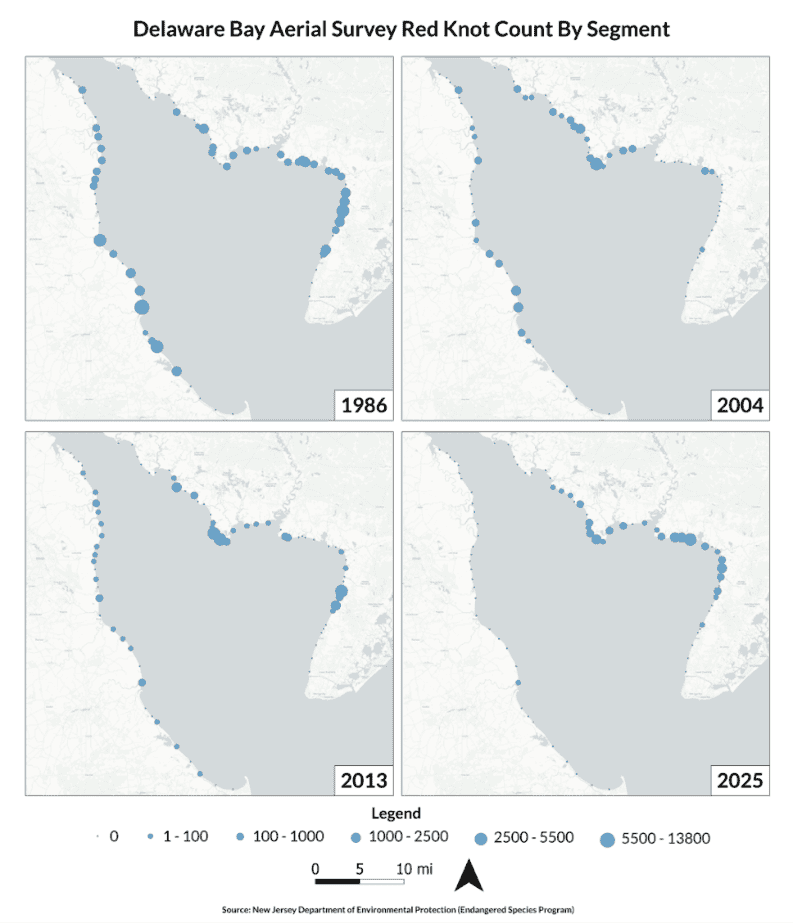
The map shows the distribution of red knots over the last twenty years showing how shorebirds have responded to protection. Map by Stephanie Feigin
Ironically, the protection provides better viewing. Conserve Wildlife Foundation of NJ’s Larissa Smith has worked diligently to recruit volunteers to post signs and rope barriers, restricting access to viewing areas, such as roads that end on the bayshore. She trains stewards who help people understand the ecology of birds and crabs and the reasons for the restrictions. As birds gradually become accustomed to the restricted access, they forage right up to the barrier, allowing photographers and viewers great views of shorebird and crab spawning. It’s a win-win.
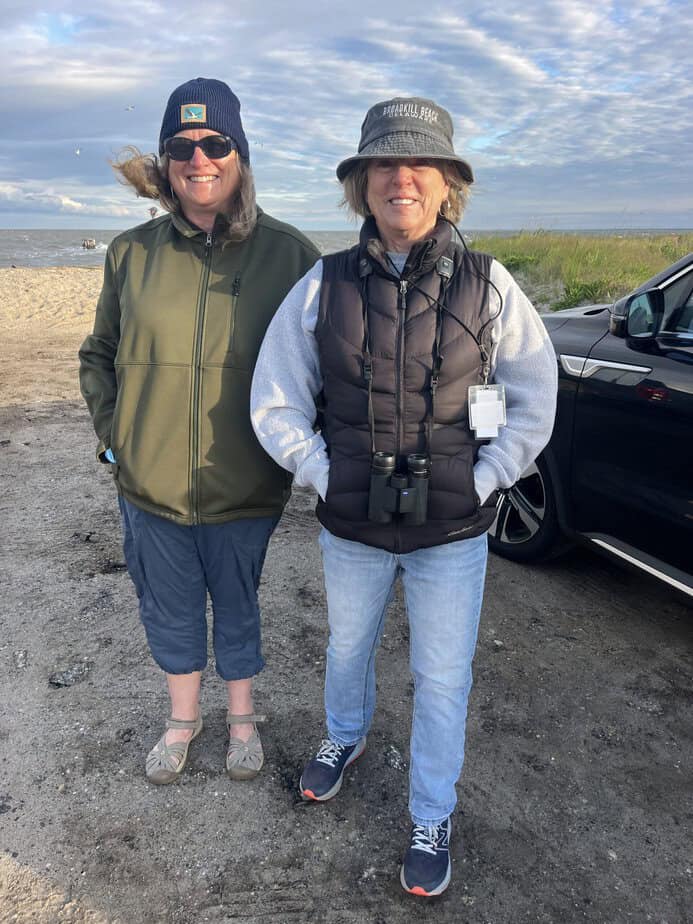
Steward Leader Larissa Smith with Steward Christine Helmer at Cooks Beach
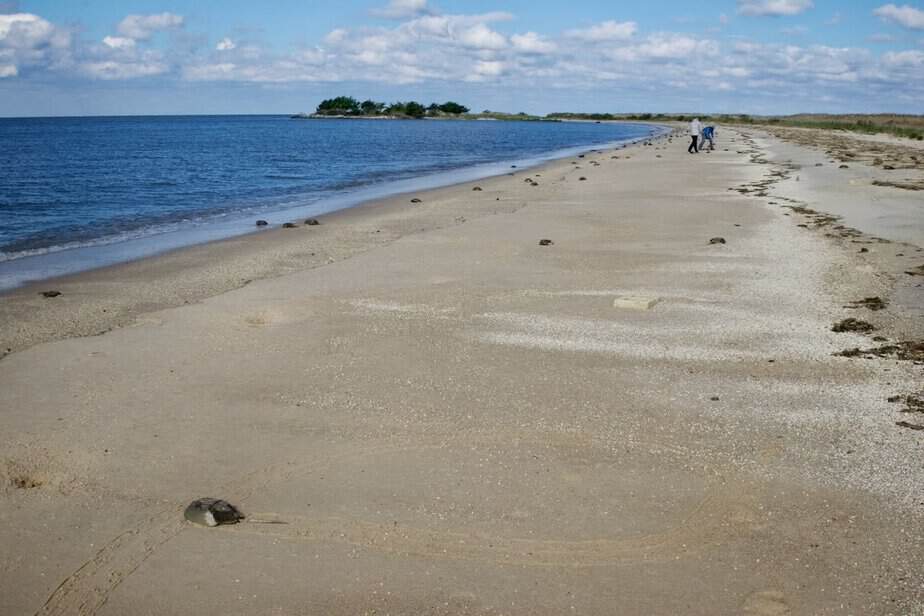
Mandy Dey and Jay Bolden flip horseshoe crabs on Thompson’s Beach while surveying shorebirds at low tide. The American Littoral Society and Wildlife Restoration Partnership, using funds from the US Fish and Wildlife Foundation, restored this beach in 2025.
And there is a practical side to this. The American Littoral Society and my group, Wildlife Restoration Partnerships, have, over the last 12 years, restored nearly all of these beaches at least once with high quality sand. The projects are funded primarily by the National Fish and Wildlife Foundation because of the shorebirds and horseshoe crabs. But the protection lasts only for the time they are here, one month. For the other 11 months, beaches are open for everyone to enjoy. It’s only fair; the birds get what they need.
Shorebirds, horseshoe crabs, and the people who work to protect them and the people who enjoy the sight of them are grateful to NJ Fish and Wildlife for making this protection the law.
