
read the previous post on Thompson’s Beach
A Failure to Learn
Our work on Thompson’s marsh covers only a tiny patch of the Delaware Bay marsh. One might say our one-acre restoration is too small to have any significant impact, so why do it? Big projects are certainly more important. And ultimately we will need many of them to realize Governor Murphy’s recently announced coastal resiliency policy initiative
But big projects can fail big and waste taxpayer dollars. The Delaware Bay has seen a number of these failed expensive projects, like the shoreline restoration of Sea Breeze where $6 million in state-funded cinder blocks lie uselessly on the shore of this now-abandoned town. Indeed unfinished protection in the mouth of the Maurice River, where a sunken barge is all that remains of a failed effort to stop the erosion of Basket Flats and the other adjacent wetlands that protect the towns of Port Norris and Heislerville.
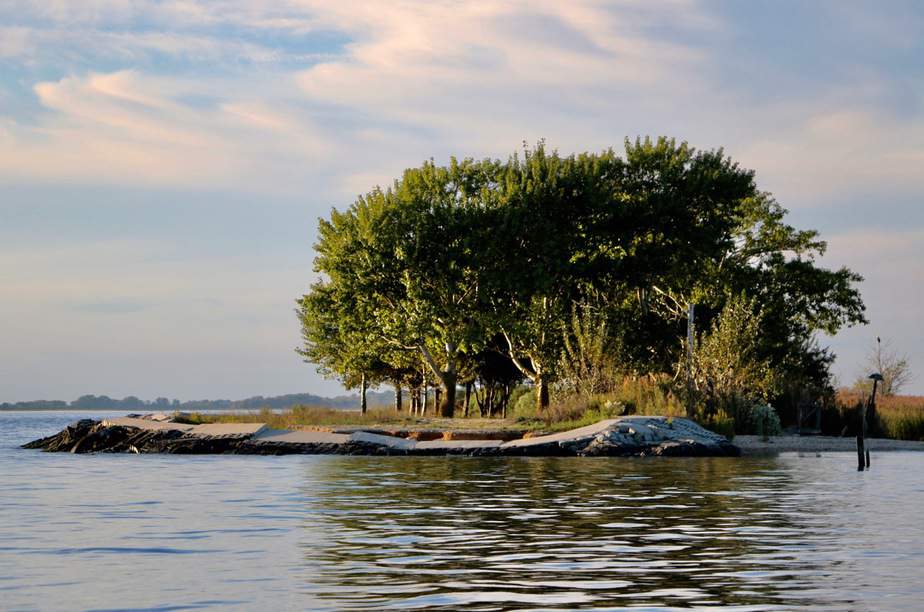

Seabreeze NJ was once a popular resort on Delaware Bay. A failed effort to protect the town left it abandoned and damaged.
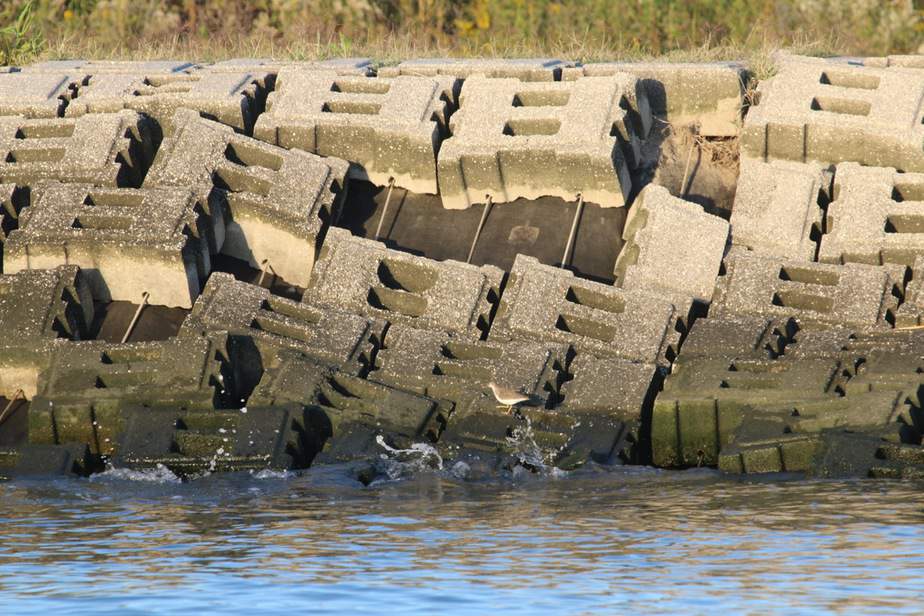

Engineers used cinder blocks to carpet the beach in a misguided effort to resist the sea.
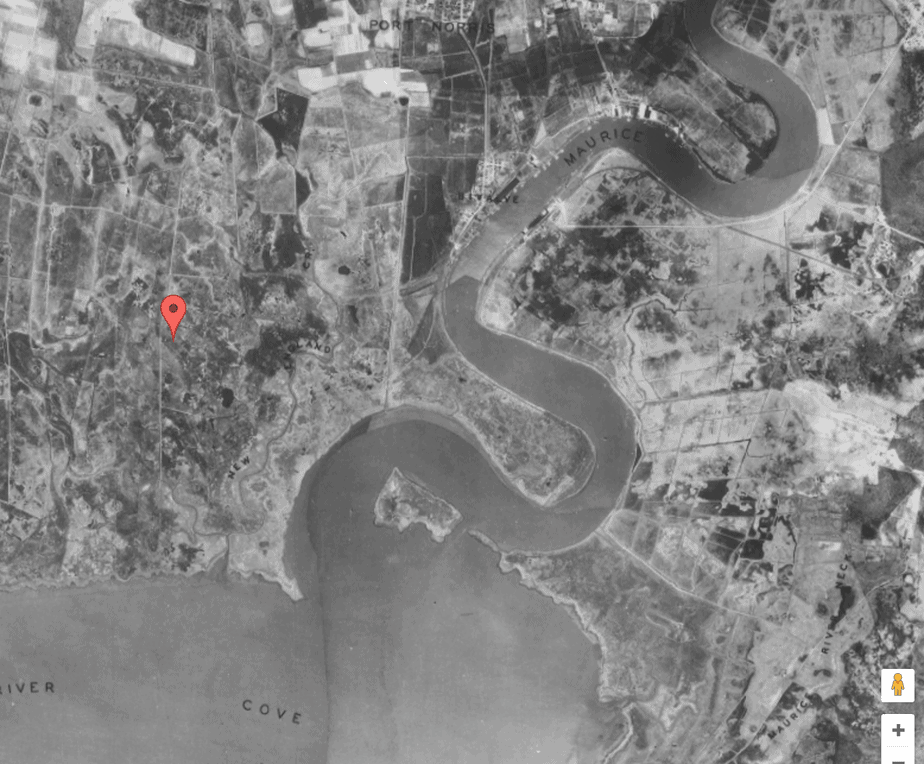

1935 aerial photo of the mouth of the Maurice River
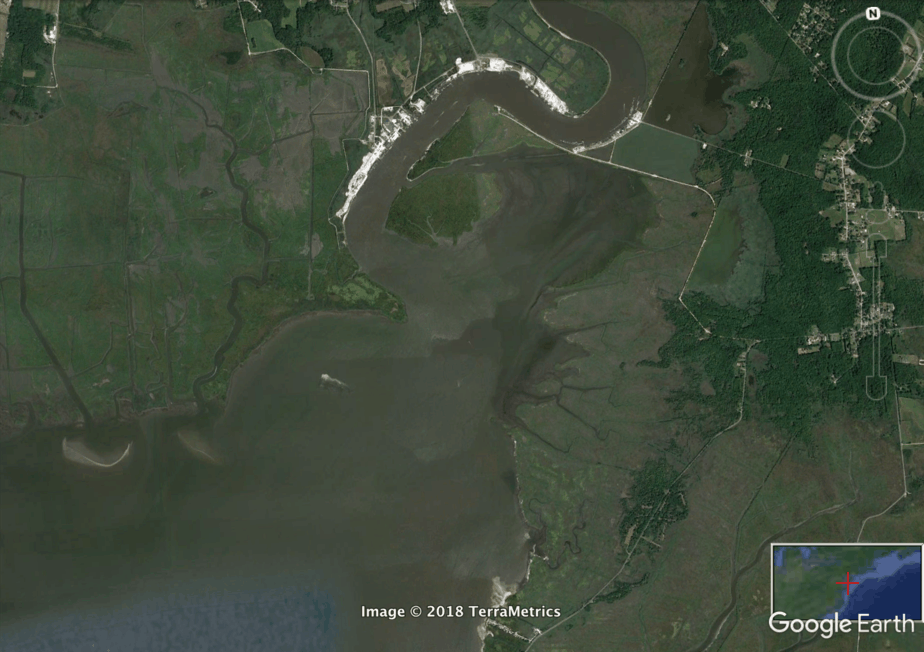

A 2018 aerial image of the same area showing the wetland loss particularly on Basket Flat, the tiny peninsula protecting the town of Bivalve.
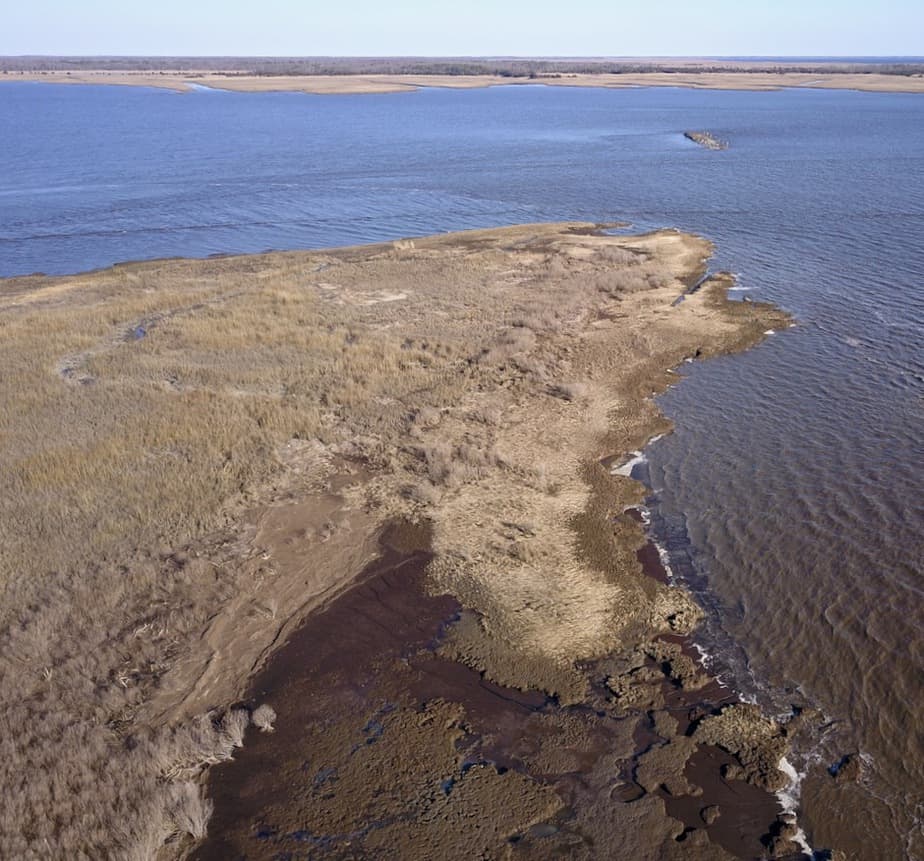

Basket Flat on Maurice River with the old barge at the top right of this picture. It was meant to protect the peninsula from erosion
Working With Nature
These resiliency failures occurred for many reasons, but an important one was failing to take advantage of natural defenses to augment protection. Why defeat the Bay with concrete and steel when you can achieve the same goal with high functioning marsh and well-protected beaches?
Easier said than done of course which points to the second reason for recurring failure – no one monitored the projects in order to describe the conditions before during and after the project. Someone engineered the project, someone else got a contract to construct it and then everyone walked away. No one the wiser. Or they did monitor the project but never used the data in a way that described the success or failure of the work and its ultimate ecological impact.
Perhaps this is the most the failure because the experience provided no clues on how to carry out the next project. Each new project becomes a gamble or worse useless in the face of an ever-growing threat. Instead, the failed projects speak for themselves, apocalyptic-like reminders of our inability to protect the wildlife and people of Delaware Bay.
Start Small and Learn
So our project provides more than a one-acre fix for abandoned salt hay farms. It also helps us understand the most cost-effective way of conducting larger more expensive projects and create innovations that can improve ecological condition Better to start small and learn.
First the problem. Over 10,000 acres of Delaware Bay marsh remains damaged after a wholesale abandonment of at least a century and a half of restricting tidal flow with earthen dikes. The dikes blocked sediment-rich tidal waters to allow salt hay or spartina patens to grow and cut for hay. Each cutting removed vital biomass. Without new sediment or biomass, marsh elevations fell about 2 feet but in some areas as much as 5 feet. Without the dikes, the sea scoured the newly exposed and sparsely vegetated wetlands leaving bare mud as shown in the photos of my previous blog.
Thompson Marsh could have turned into a big mud flat like Cox Meadow endangering the people in the town of Heislerville NJ. Instead, the state allowed PSEG to avoid the cost of a new cooling tower by managing wetlands. They hoped the addition of productive marsh would offset the loss of fish killed by increased use of cooling seawater. One can see the work in the following series of photos.
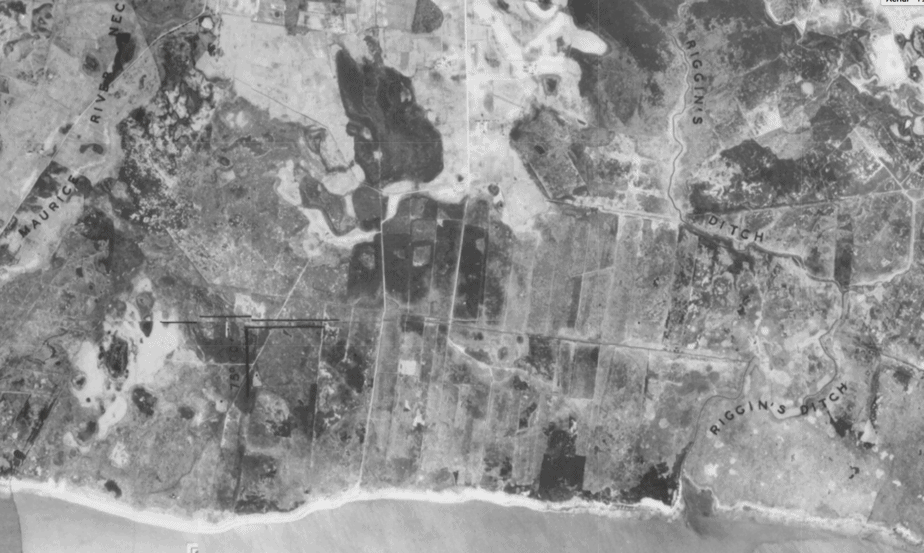

1935 aerial of salt hay farms on Thompsons Marsh
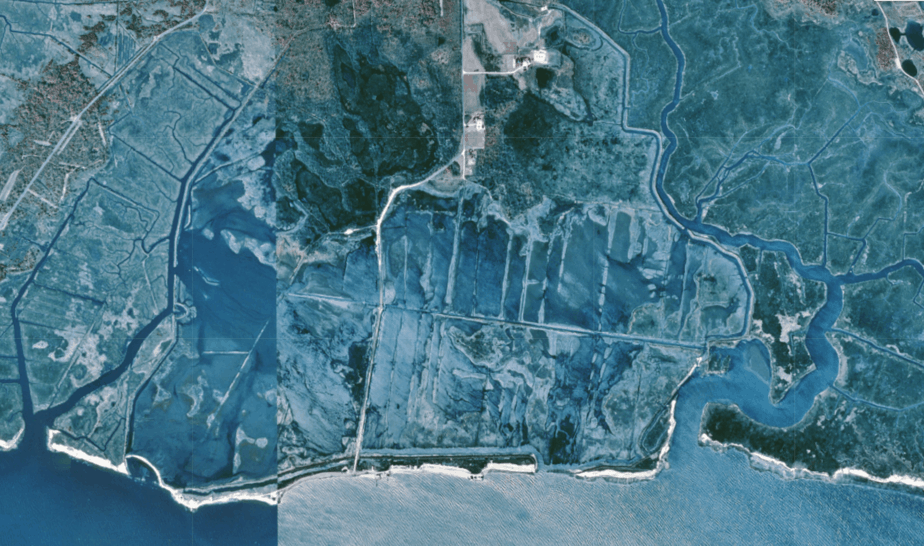

1995 image of the eroding marsh after the dike confining the salt hay farm were abandoned
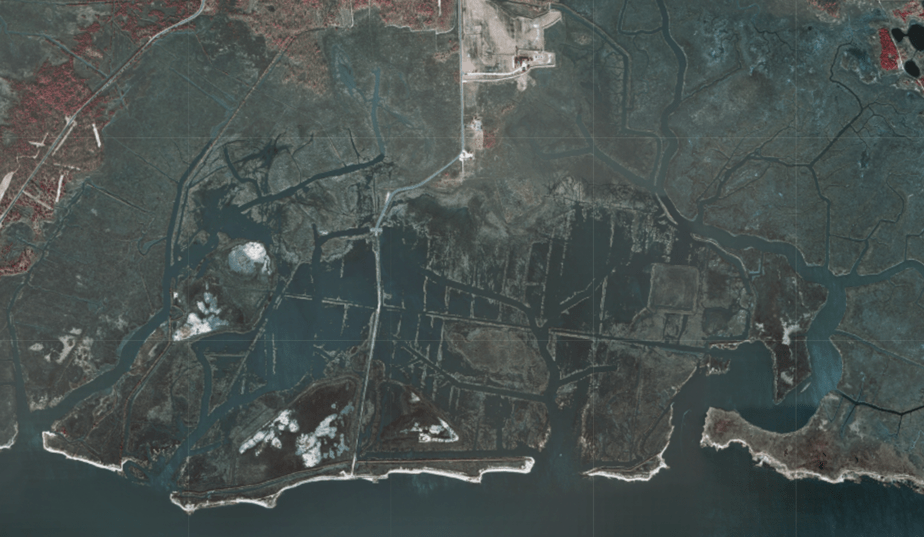

2002 photo of the new wetland creek system being dug by the PSEG Team
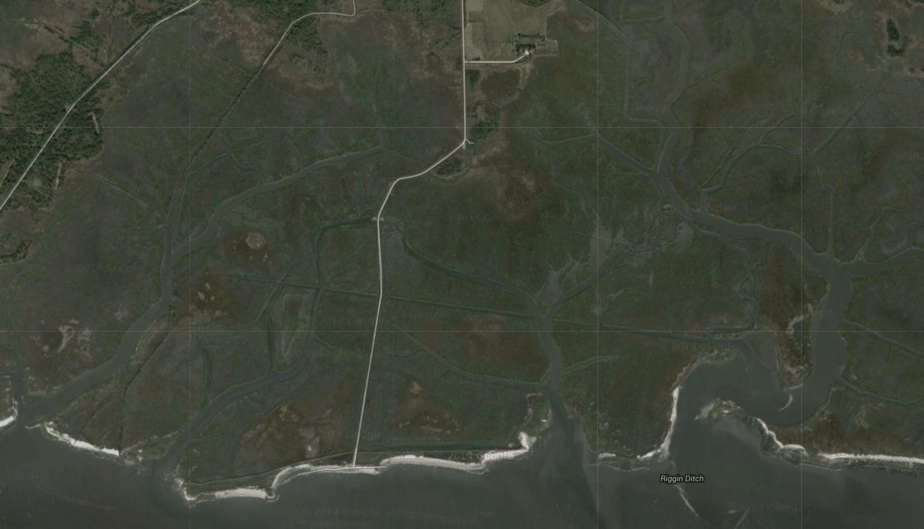

2012 photo of the completed system
The PSEG engineers dredged a new watershed of small creeks allowing a slower draining and flooding of the marsh. It worked. The wetland began recovering slowly over time. The new inflow of sediment and the sparse growth of Spartina alterniflora or marsh cordgrass built new biomass. The papers of the restoration team spoke of recovery.
Unfortunately, sea-level rise dashed those hopes. It matched the elevation gained by a renewed marsh. The higher volume of water and more frequent storms scoured mud and sand in the mouth of the creeks. It also eroded creek banks thus increased tidal flow. There is spartina growing over much of the restored area but at a much lower density and slower growing than cordgrass at the proper elevation.
A New Start on Thompsons Marsh
For Thompsons and many of the once farmed tidal wetlands on Delaware Bay, the only hope is to start rebuilding elevation with new mud.
Our wetlands restoration is an experiment with two goals. First how best to manage an old hay farm back to a stable, productive marsh? The second how to do so at a practical cost?
For example our dikes. In the old days and the PSEG work, workers made new dikes by digging into the marsh. This damaged marsh and created new ditches for water to scour away sediment. We use Coir logs, or 10 feet long 24-inch diameter jute bags of coconut fiber, to form our dikes. They are cheaper than digging and will gradually degrade into the marsh. Most important we avoid damaging the fragile wetland. Managers have used Coir logs elsewhere to confine mud but not in Delaware Bay with its 7-foot tide swing. If successful we will have a low cost and an environmentally friendly solution that can be scaled up to larger areas, one of our top goals.
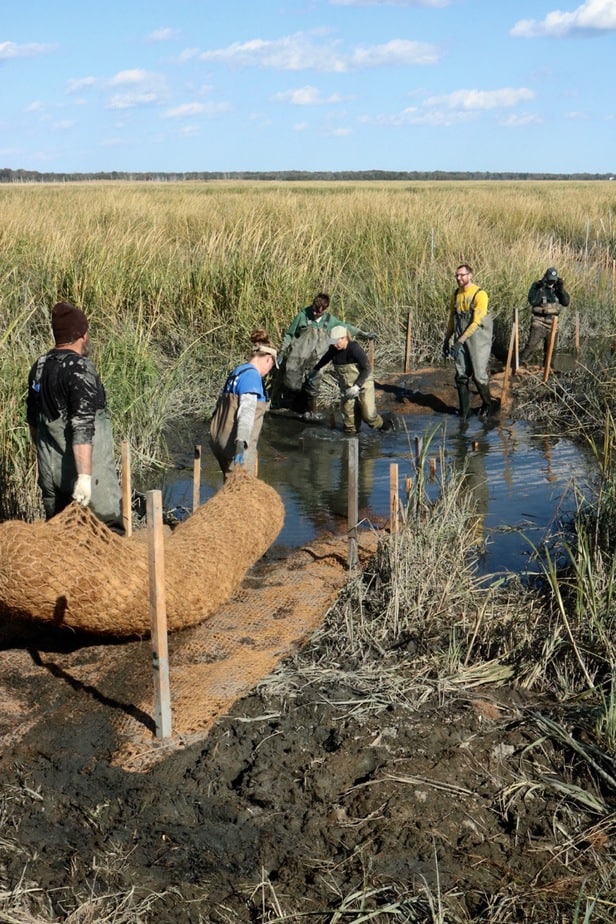

Shane Godshall directs the American Littoral Society team carrying the 24 inch coir logs. The logs float so they were placed at high tide.
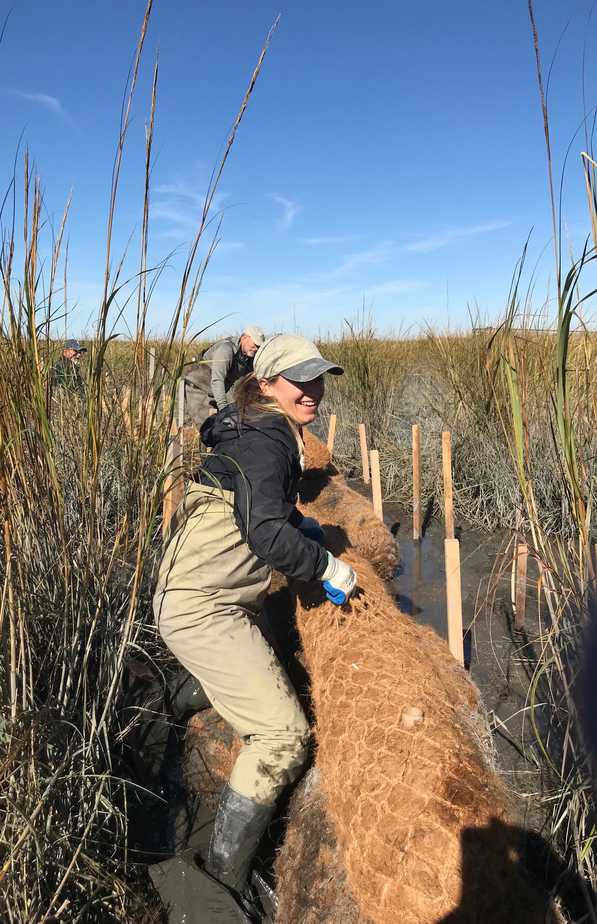

Stephanie Feigin Quinn Whitesall and Bill Rinert hoist a 12 coir log onto the 24inch log to make the containment area match the correct elevation
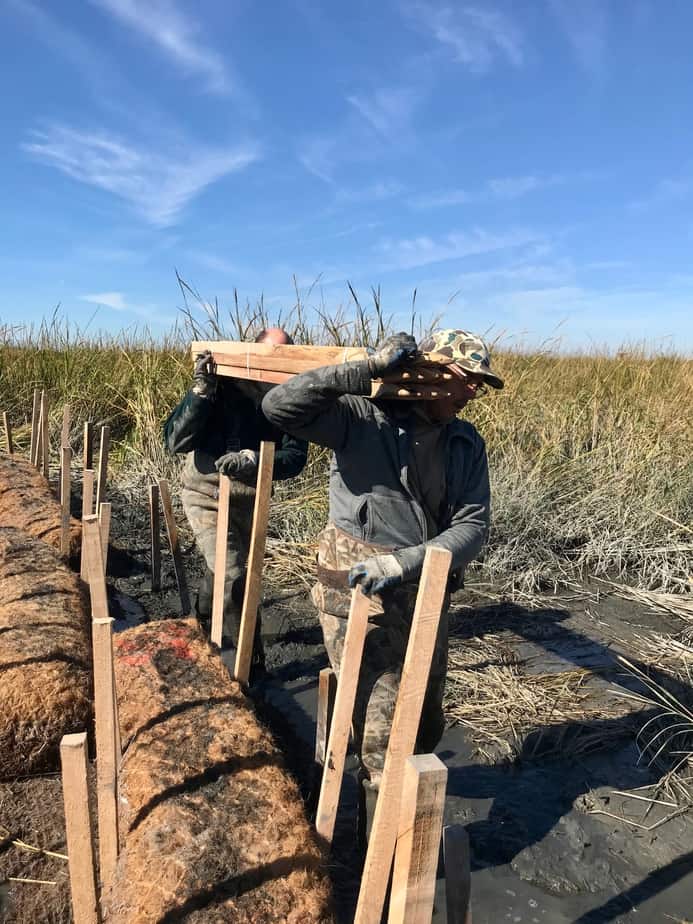

Joe Smith and Mike Fitzpatrick carry 6 foot oak stakes used to hold the coir logs in place.
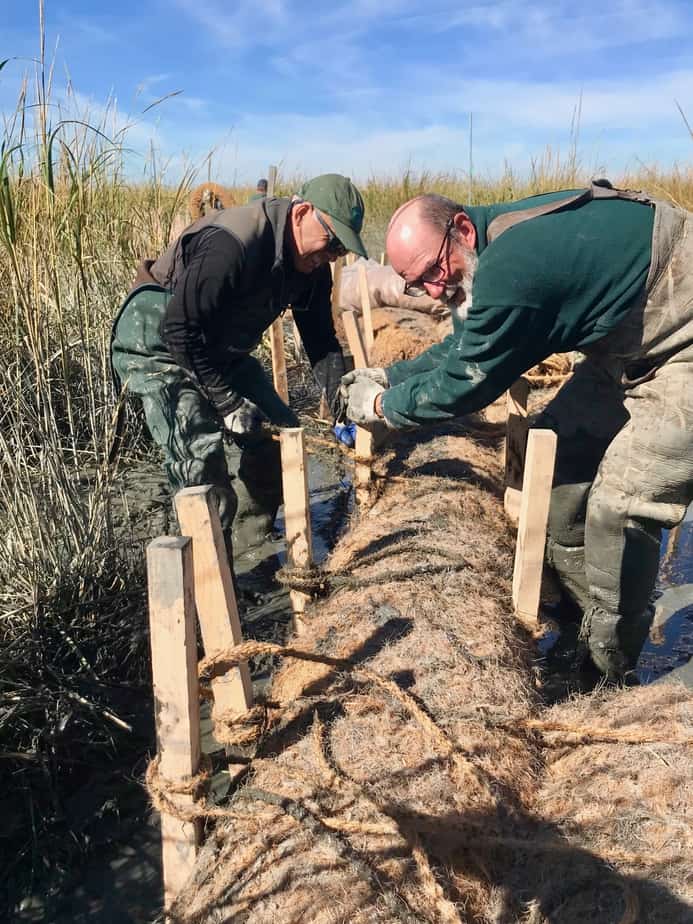

The author and Mike Fitzpatrick tie down the coir logs
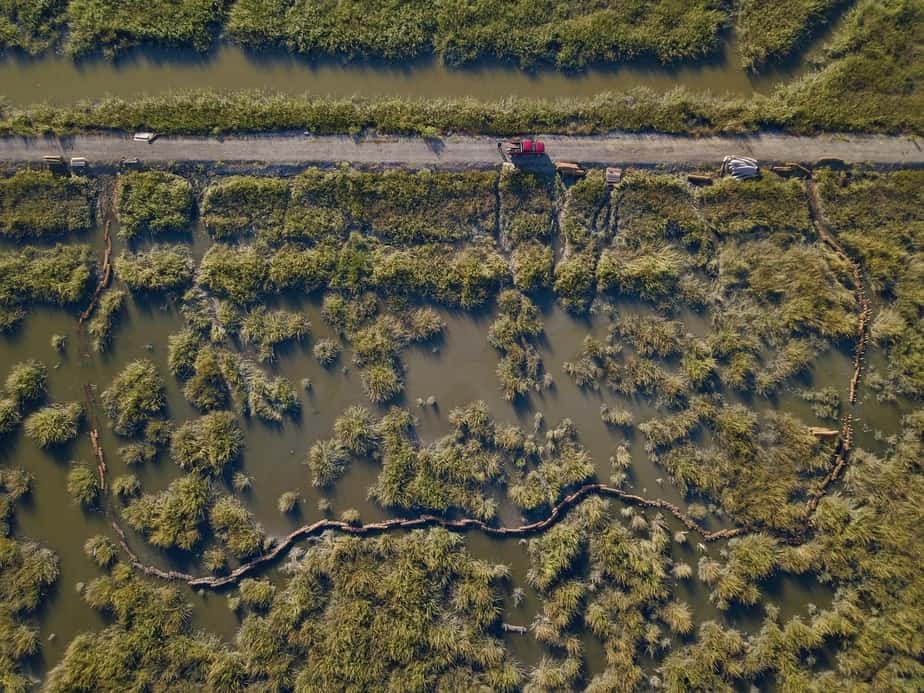

A drone shot of the restoration area show the coir log containment dike. We will complete the dike next week.
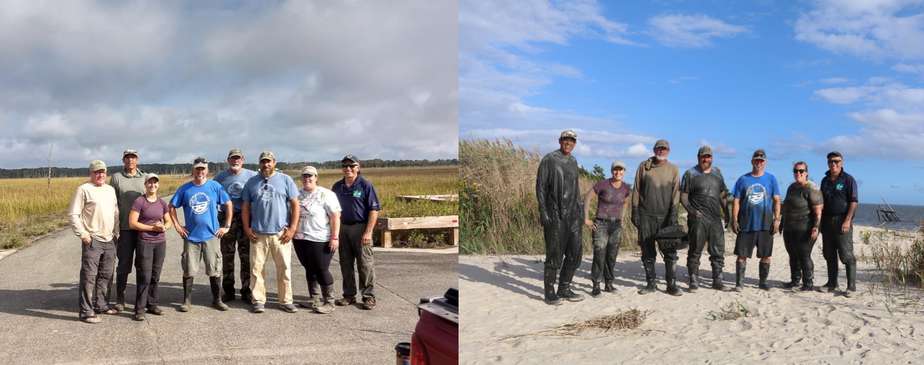

Before and After building the coir dikes. From right Larry Niles, Quinn Whitesall, Captain Al Modjeski, Shane Godshall, Mike Fitzpatrick, Stephanie Feigin, Joe Smith. Not in this shot but below are Zack Royle, Julie Schumacher, Zach Nickerson, and Bill Rinert.
Restoration Is Experimental
In a way all restoration is experimental. Even when done successfully conditions matter enough to make every job different. Restoring a wetland on the gulf coast where tides rise no higher than 2 feet, is far different than Delaware Bay, where the tide can swing 8 feet in a daily cycle. In Florida, winters can serve up a nippy 50s while on Delaware Bay the weather can turn genuinely foul. The bay freezes in most years and thick ice moved by daily tidal cycle can scour and destroy. So previous experience provides some guidance for the wetland biologist, but one must always pursue their restoration as something unique requiring great care and sound monitoring.
This is why we must conduct this experiment in marsh restoration.
Read the next post on Thompson’s marsh restoration
