
Previous Post
Thumbs Up
In 2018, Clive Minton, Humphrey Sitters, and I watched a 16,000-strong red knot flock occupy Pierces Point beach on Delaware Bay. The flock was a high point for the stopover. Our team counted 34,500 knots and more than 20,000 ruddy turnstones that year. Sadly, it was the stopover’s nadir, because the count fell soon after to a low of just 6,800 knots in 2020. Sadder still, it was Clive’s la st trip to the bay after coming nearly every year since 1997. He died later that year in a car accident at 83. For all of us who knew Clive, the high count was a gift because he was there at the start of this project 29 years ago and watched in horror as a phenomenon known around the world fell to greed and gross mismanagement.
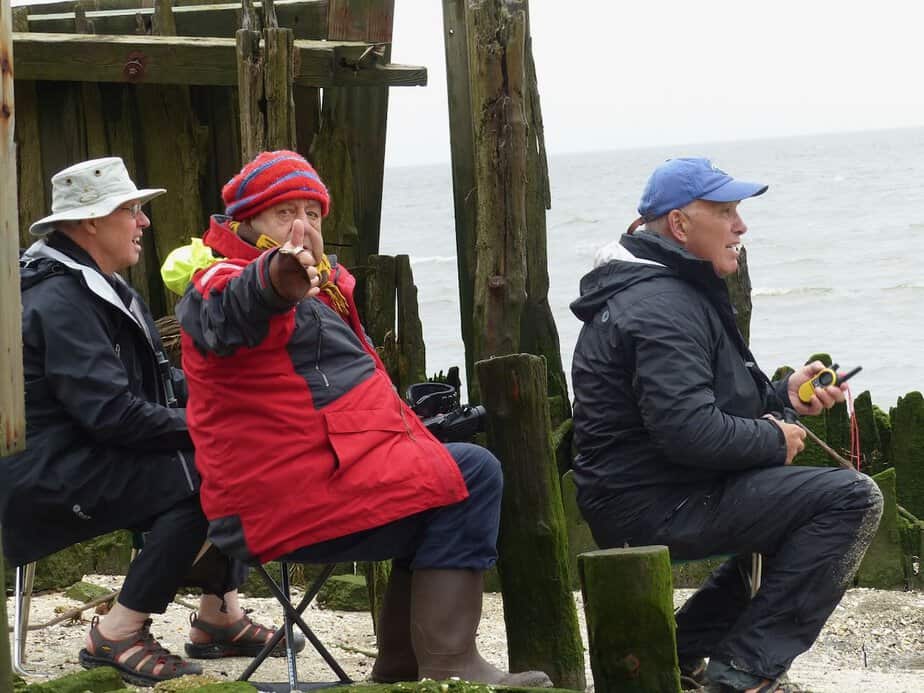
Humphrey Sitters, Clive Minton and Larry Niles waiting to make a catch with Cannon nets on Reeds beach NJ. 2017. Photo by Angela Watts
This year’s flock would make Clive smile again. We counted over 33,000 red knots, the highest count since that time with Clive and Humphrey in 2018. The distribution varied. Then, most of the knots used the Reeds to Pierces complex of beaches. Now, a portion of the flock used these beaches to forage, but the majority found the inaccessible overwash beaches between Dennis Creek and Bidwells Creek more suitable. Our boat team, including me, Stephanie Feigin, Philippa Sitters, Antonio Brum, Mateus Hass, Alinde Fotjik, and Amanda Dey, counted 24,000 red knots. Overall, we counted 33,132 red knots, 32,619 ruddy turnstones, 16,704 sanderlings, 91,778 semipalmated sandpipers, 1 short-billed dowitcher, 12,362 dunlin, and 16,580 laughing gulls.

Results of our May 25, 2026, ground and boat shorebird count covering all the NJ Bayshore.
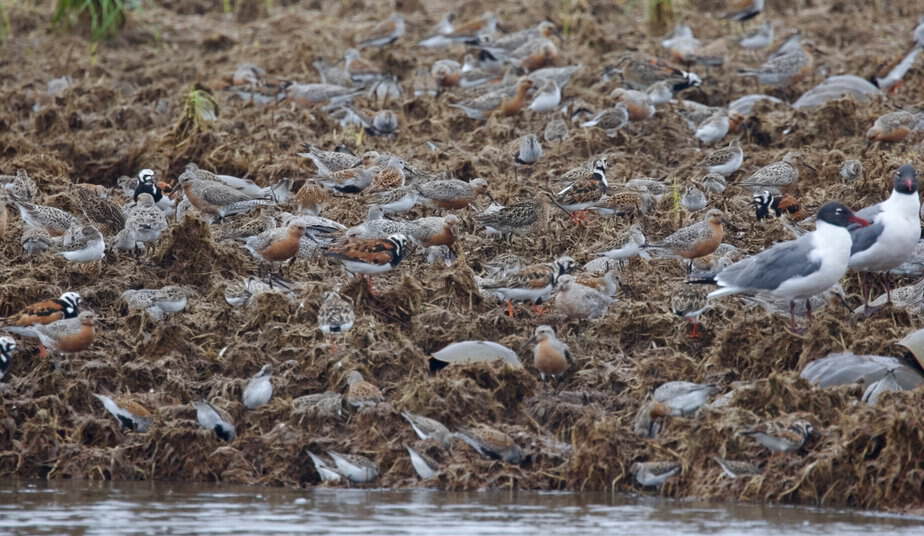
All species of shorebird using the bay were seen here on a small patch of sod bank near Moores Beach, NJ, including red knots, ruddy turnstone, sanderling, semipalmated sandpiper, short-billed dowitcher, and dunlin.
Better availability of eggs was at the heart of the increase in shorebirds. Overall, the crab spawn was similar to previous years. Based on six weeks of egg-density monitoring conducted by a team of young students (Justine Torres, Nadia Wisniewska, Jarod Bowen, Josh Barreiro) led by Susan Linder, we saw little change in egg densities overall, and we certainly saw no evidence of the agency biologist’s prognostication of recovery in support of their never-ending effort to kill more crabs.
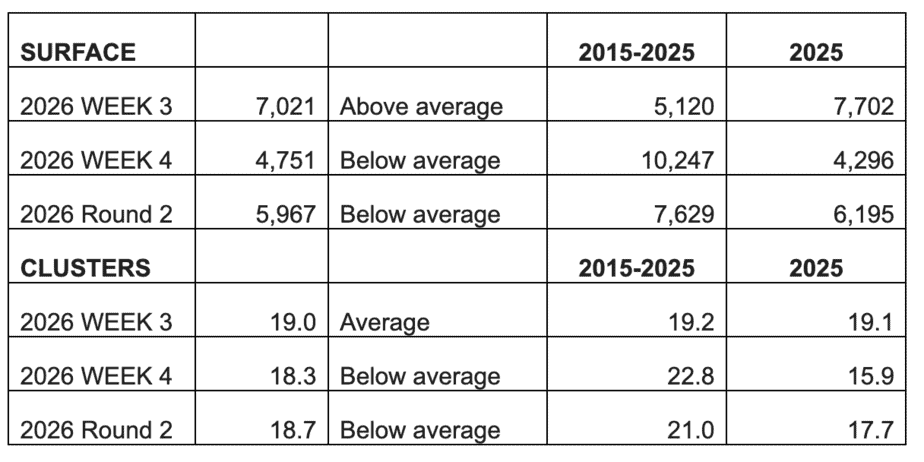
Horseshoe Crab egg densities during the time of the shorebird stopover. Overall egg densities were roughly on par for the last 10 years – in other words, no improvement in the egg densities. The timing of the eggs saved the stopover this year, not an increase in horseshoe crab spawning ( table by Susan Linder)
Availability was good for the birds this year because of the timing of the spawn, not an increase in numbers. The crabs started slowly in weeks one and two because of cold bay water, but by week three the water warmed, and with the new-moon spring tide, the crabs spawned in great numbers.
The birds responded directly. During the weak spawn of early May, the average red knots weight barely changed and remained similar to their arrival weight of just 112 grams. The knot’s fat-free weight is 125 grams, so the birds at the start of the stopover were in real need but found few eggs. But soon, the lackluster weight gains gave way to substantial increases in week three, alongside the increase in egg densities with the new-moon tides. By the fourth week, the knots’ average weight was over 180 grams.
Each year, we compare the proportion of knots that reach the minimum weight necessary to breed successfully in the Arctic, known as P180. This year, the P180 metric topped 70 percent, a proportion not seen since 2016. Even now, the crabs continue to spawn in good numbers, so I am sure nearly all birds left in good condition.
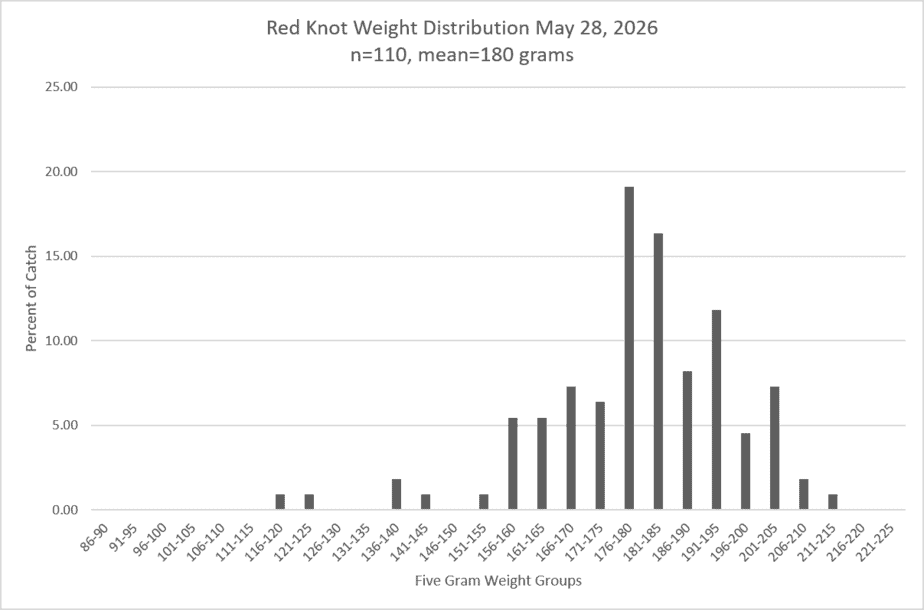
The distribution of the weights of red knots in our last catch of the season. This catch is used to estimate the likely proportion of red knots that reach the weight necessary for successful breeding in the Arctic or 180grams. The metric called P(180) helps to understand the condition of the stopover for all shorebirds (historgram by Stephanie Feigin)
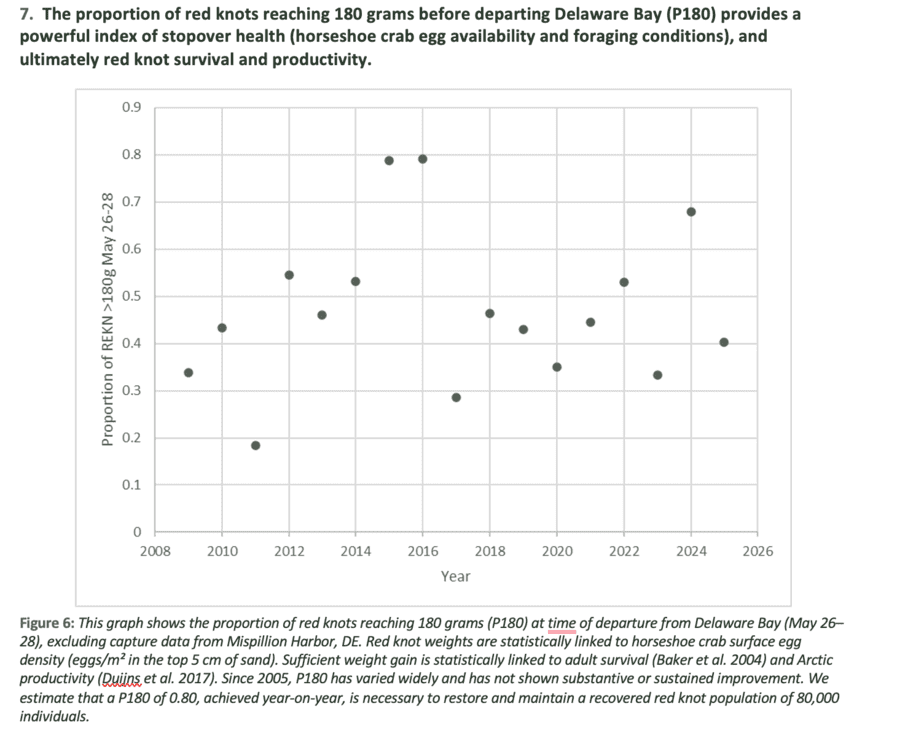
P(180) from 2010 to the present. In 2026 the P(180) was 70%.
This is a remarkable conservation feat for all the people involved in protecting the Delaware Bay stopover. First in mind are our shorebird and horseshoe crab Teams. Now in our 29th year, we still have many team members from the beginning who continue to come, including Mandy and me, Humphrey Sitters (who couldn’t make it this year), Joanna Burger, Peter Fullagar, and Gwen and Gerry Binsfeld. Just behind us are younger folks like Stephanie Feigin, Philippa Sitters, and Alinde Fotjik, who have each come for ten to 15 years. Now we create more opportunities and pay for younger biologists to take part. Susan Linder and her team of students from Stockton University conduct egg density studies and help give us a fuller picture of the stopover’s health. Young and old deserve congratulations for the defense of the stopover.
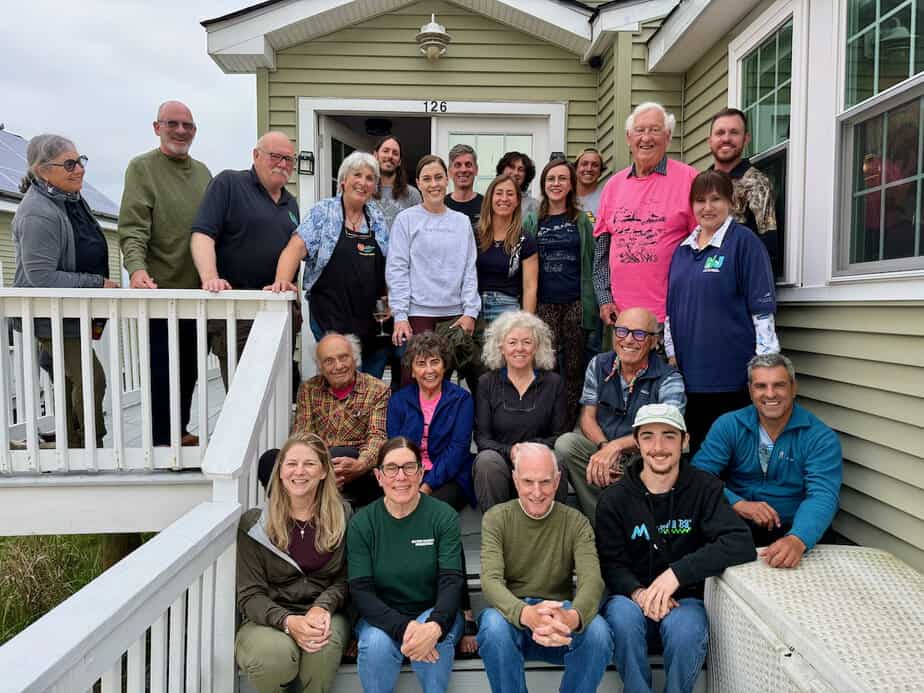
The 2026 shorebird team from top left Gwen Binsfeld, John Bloomfield, Jerry Binsfeld, Jane Galetto, Theo Deihl, Alinde Fotjik, Jay Bolden Stephanie Feigin, Justine Torres, Phillipa Sitters, Candence Bintliff, Peter Fulagar, Mateus Haas, Martha Fullagar ( middle row) Michael Gochfeld, Joanna Burger, Amanda Dey, Larry Niles ( bottom row) Susan Linder, Susan Moody, Ren Monte, Luca Sheldon, Antonio Brum ( other egg team members Nadia Wisniewska Jarod Bowen Josh Barreiro were not present)
Backing up the biologist team is an army of volunteers whose compassion drives them to protect birds and rescue horseshoe crabs. Larissa Smith at Conserve Wildlife Foundation of NJ and her volunteer stewards are stalwarts of protection and education, providing the public with an intimate understanding of the stopover, birds and horseshoe crabs, while keeping a watchful eye for conservation officers and alerting them to any people ignoring the protection efforts.
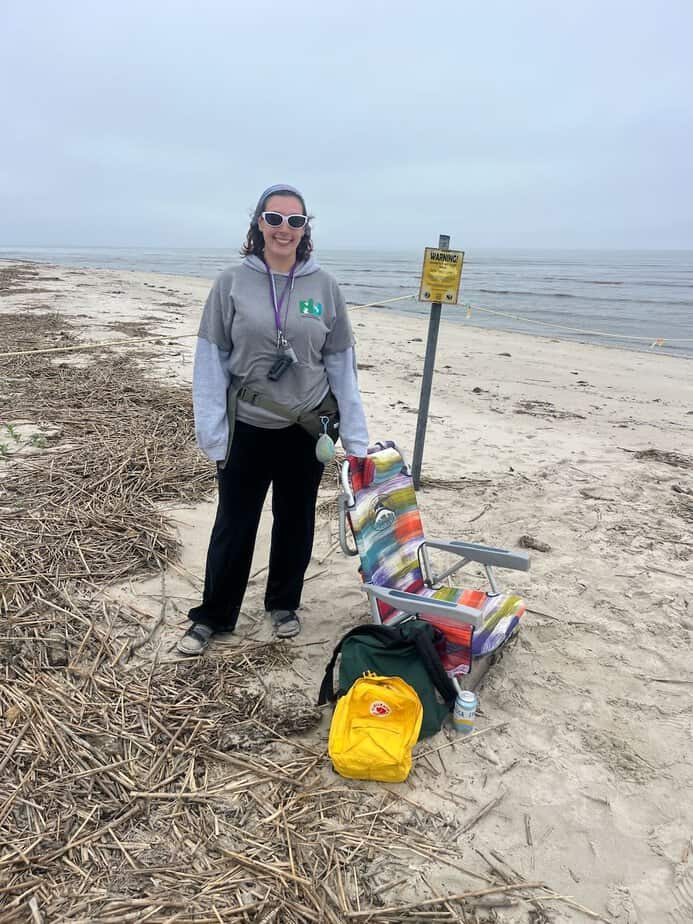
Kaitlyn Anthony, defending the closed area of Villas Beach, is one of many stewards who protect shorebirds from disturbance
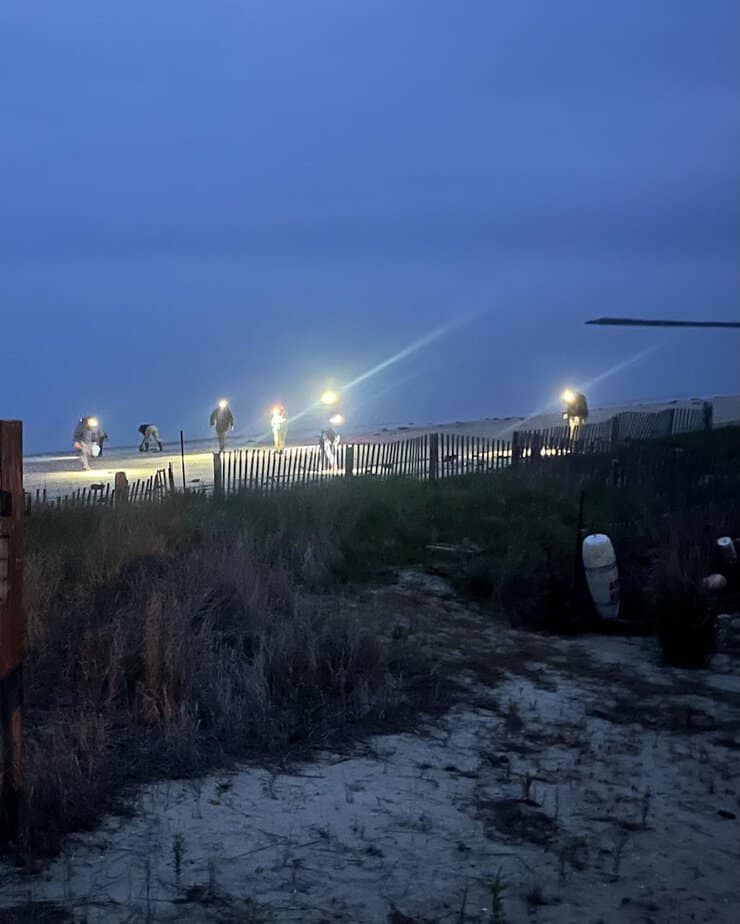
Lisa Ferguson from the Wetlands Institute manages some 167 volunteers who come out after dark to rescue crabs flipped over by bay waves or caught in bulkheads and other shoreline traps. I watched these people combing the beaches with headlights (they do it at night so as not to disturb foraging or roosting shorebirds) for any crab in distress, not only flipping them but also carrying the weakest down to the waterline. Our shorebird team all flip crabs when we are out surveying or banding, and I wonder if there is any purer act of animal compassion than saving a helpless horseshoe crab?
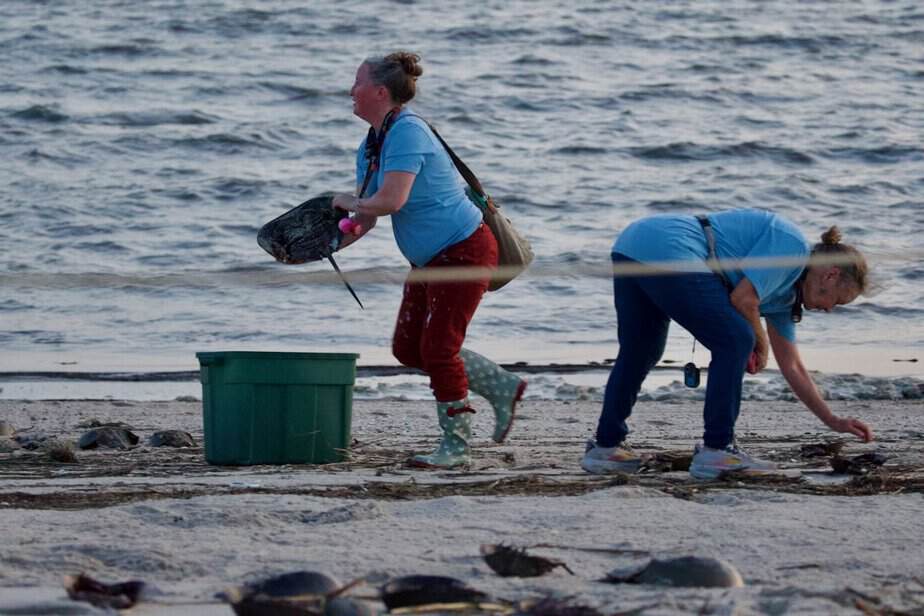
Gail Howarth, Lauren Sicher and Kathy Haley ( not seen) rescuing horseshoe crabs on Reeds Beach NJ
Even further behind the scenes are the volunteers from Jane Galetto’s Citizens United to Protect the Maurice River, who provide our shorebird and horseshoe crab team with dinners that are often the highlight of our day. Sometimes the cooks join us for our evening meeting and meal, providing our team of folks from North and South America, the UK, and Australia with access to Bayshore residents’ unrivaled hospitality.
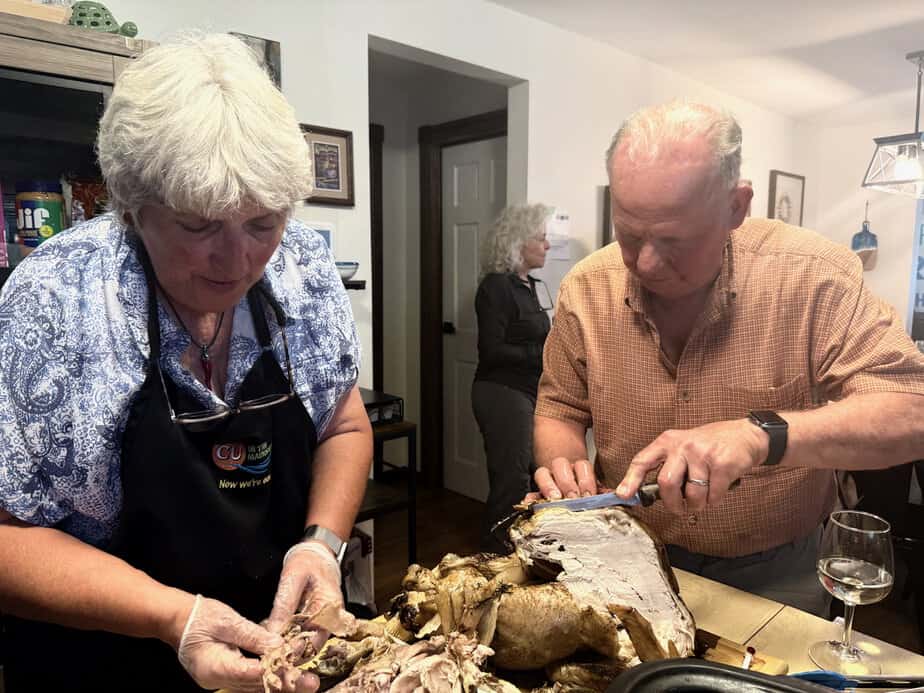
Jane and Pete Galetto ( Mandy Dey in the background) prepare a roast turkey prepared for our team’s dinner. Jane and Karla Rossini at Citizens United to Protect the Maurice River organize a team of volunteers to bless our team with well-prepared, interesting, and delicious dinners every night during the season.
Finally, I thank the National Fish and Wildlife Foundation for their continued support of this project, one of the longest-standing wildlife surveys in the world. This year, they joined with members of the Horseshoe Crab Recovery Coalition to host a meeting of pharmaceutical executives and university scientists to help increase the adoption of synthetic lysate, stop the killing of horseshoe crabs for their blood and raise funding for restoring horseshoe crab habitat on Delaware Bay.
With this final post of the 29th season of our work on Delaware Bay, I would like to offer a few closing points. First of all, our work has been a great success this year. As far as we can tell, every bird got off safely and in good condition, and every crab driven to spawn found the habitat to do so.
We accomplished this while resisting the nearly inevitable destructive outcomes of our modern fishery system. Against the odds stacked against us by multinational blood corporations, politically entrenched fishery corporations, and our current national mania for making money against the interests of future generations and good sense, we have protected one of the world’s great ecosystems.
But sadly, our work is not done. We need to remember that in every other place where horseshoe crabs spawn, they have been decimated to ecological oblivion. Of all the great East Coast esturaries, the Chesapeake, Raritan Bay, Long Island Sound, Cape Cod Bay, and Nantucket Sound, only Delaware Bay remains an ecosystem flush with an abundant crab spawn and a mind-blowing shorebird flock. But we cannot let our guard down. Our success will be used by fishery agencies as justification to kill more crabs with little benefit to anyone but a few investor-driven corporations and none for Bayshore residents. We aim higher. Ending the killing of horseshoe crabs for any reason is the speediest path to recovery back to the time when the Delaware Bay ecosystem and its shoreline residents thrived. We are on the right path, but still have a way to go.
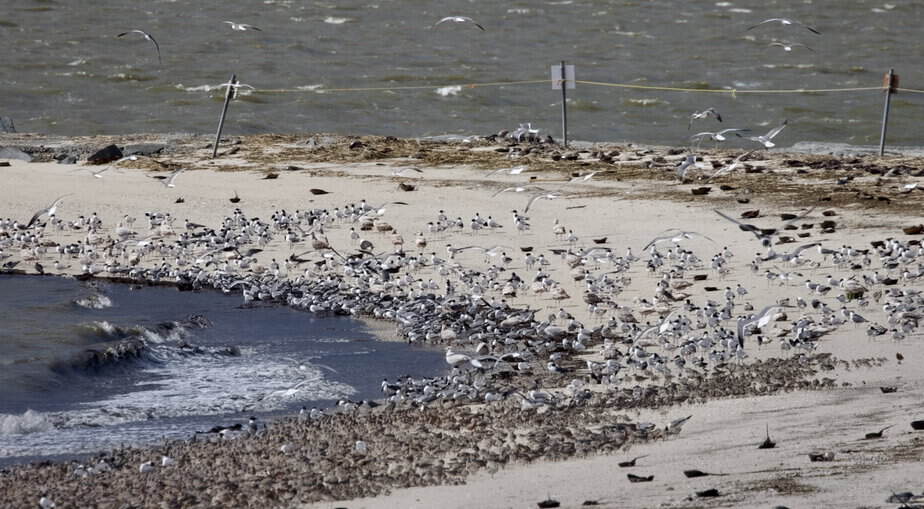
Laughing gulls, red knots, and ruddy turnstones forage on horseshoe crab eggs, gathering in the sand at the Reeds Beach jetty.
